TroyBoy21/Shutterstock
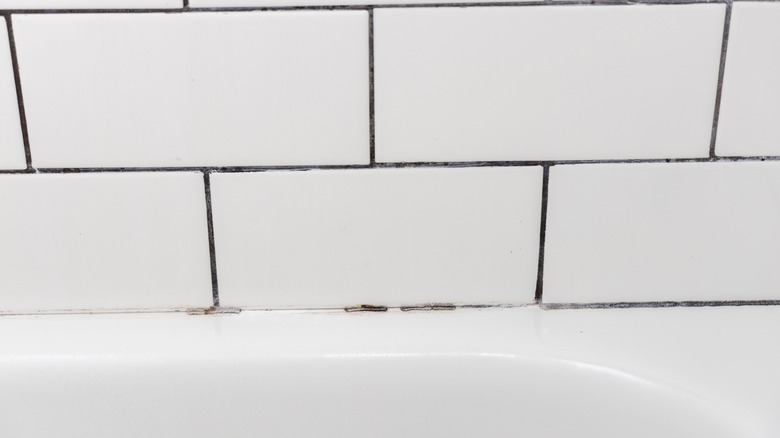
Tile grout may look tough, but it’s actually pretty porous. That makes it a prime target for mold growth. If you start seeing some discoloration, it could be more than just dirt – it could be the first signs of a mold problem. Keep an eye out for small black or green dots, or even pink or orange bacteria buildup. And don’t just look, feel the grout too – if it feels slimy, fuzzy, or powdery, that’s a sign of mold. You can also use your nose to detect any musty, damp smells that might be coming from hidden mold growth.
Mold often hides in corners and other tight spots where humidity builds up. So be sure to check those areas carefully. Catching these signs early on can save you from having to deal with a much bigger mold issue down the road.
Compromised tile grout signals a bigger problem
John P. Woods/Shutterstock
Cracked or crumbling grout is a huge red flag, because it means the grout is no longer waterproof. That allows moisture to seep through and get trapped behind the tiles, creating the perfect environment for mold to grow. You can test this by splashing some water on the grout – if it soaks in and darkens, your sealant has failed.
Look around the problem areas too, because mold can spread from the grout to nearby surfaces like walls and baseboards. This can lead to some serious structural damage if it reaches the wooden studs behind your shower. Regularly pressing on your tiles is a good way to catch any bonding issues early, before the mold can really take hold.
Once you spot the signs of mold, make sure to take action quickly. Cleaning or re-grouting the area can help get your bathroom back in top shape.