

Pixel-Shot/Shutterstock
That thermometer reading inside your fridge isn’t a one-size-fits-all number. The temperatures vary based on airflow and humidity. The top shelf, bottom racks, crisper drawers, and door shelves all have slightly different chilling levels. Knowing these temperature zones and organizing your food accordingly will keep everything at the perfect temp. Plus, it’ll help prevent spoilage, so you won’t have to hunt for replacements as often.
The door shelves are the warmest part of the fridge, while the bottom racks are the coldest. The difference can be up to 10 degrees! Crowding the shelves blocks the airflow, making the temperature gaps even wider. But no matter where you store something, it should stay below 40 degrees Fahrenheit to stay fresh. Sorting by temp zone is an easy way to maximize your fridge’s efficiency and make spring cleaning a breeze.
Bottom shelves are the coldest and door shelves are the warmest
Fcafotodigital/Getty Images
The bottom shelves are the coldest zone since they’re closest to the cooling mechanism. Temps down there can dip as low as 32 degrees – perfect for storing quick-spoiling foods like raw meat and dairy. The top shelf is up to 6 degrees warmer, making it best for leftovers and ready-to-eat items. And the back of the shelves is chillier than the front, since it’s farther from the warm air that enters whenever you open the doors.
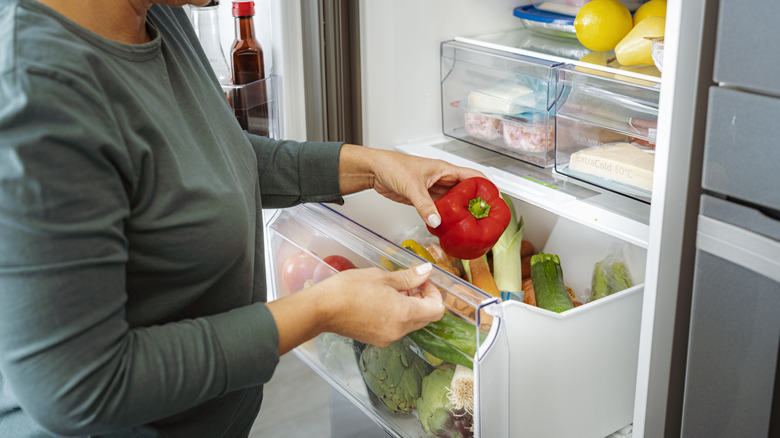
Those door shelves are the warmest part of the fridge, topping out around 40 degrees. All that exposure to room-temp air means they’re best for non-perishable items like condiments and drinks. The crisper drawers fall somewhere in the middle, ranging from 32 to 40 degrees. They control humidity to keep fruits and veggies fresh – low for fast-rotting produce, high for leafy greens.
Your fridge’s specific layout may tweak these zones a bit, but sticking to the general guidelines will help you maximize every inch of storage space.