
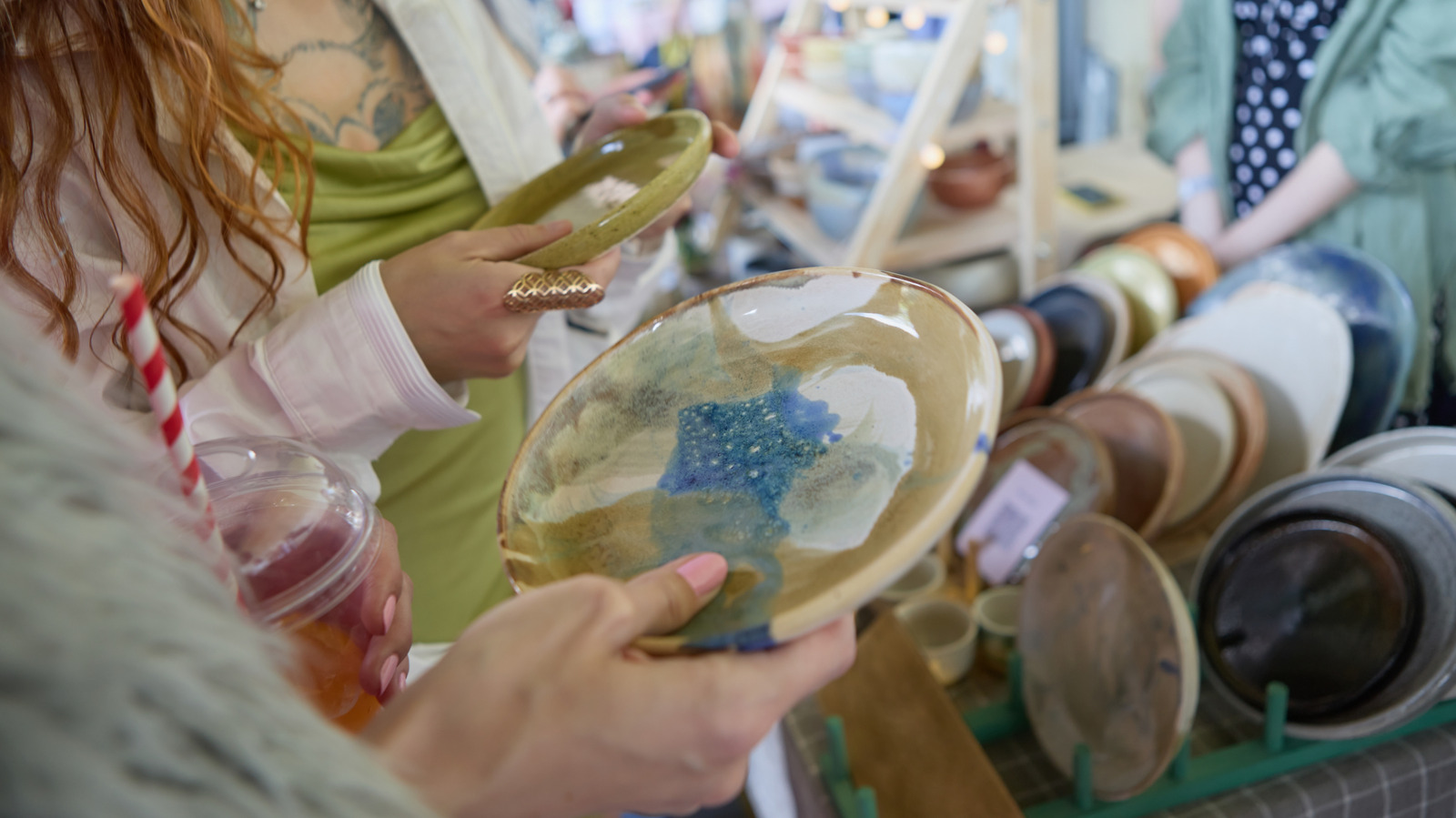
If you’re always on the hunt for items that would make the “Antiques Roadshow” folks go wild, keep your eyes peeled for pottery. One super valuable brand that collectors love to find at thrift stores is Rookwood Pottery. Rookwood was a cornerstone of the American Arts and Crafts movement, founded back in 1880. Over its long history, the company has produced millions of ceramic pieces.
Rookwood started in Cincinnati, Ohio, founded by artist Maria Longworth Nichols Storer. She was inspired to get into pottery after seeing a Japanese pottery exhibit. Storer named the company after her family’s 100-acre estate where she grew up. She began with a single kiln, using clay from the Ohio River Valley, and set up shop in an old schoolhouse. The early Rookwood pieces often had a distinctive yellowish-orange tint from the regional mineral deposits.
After winning an award at the 1889 Paris Expo, Rookwood became renowned for its American ceramics, even popularizing a glaze called “Cincinnati Limoges.” They created Japanese-inspired pottery with floral and animal motifs, bringing on star artist Kitaro Shirayamadani to decorate their vases and other pieces with intricate designs. Rookwood pieces can fetch some serious cash, from $100-$400 for common thrift store finds, up to $1,000-$3,000 for early works. Shirayamadani’s art is especially valuable, with some pieces selling for as much as $33,000 – one even hit a record $350,000 at auction!
Identifying pieces of Rookwood Pottery
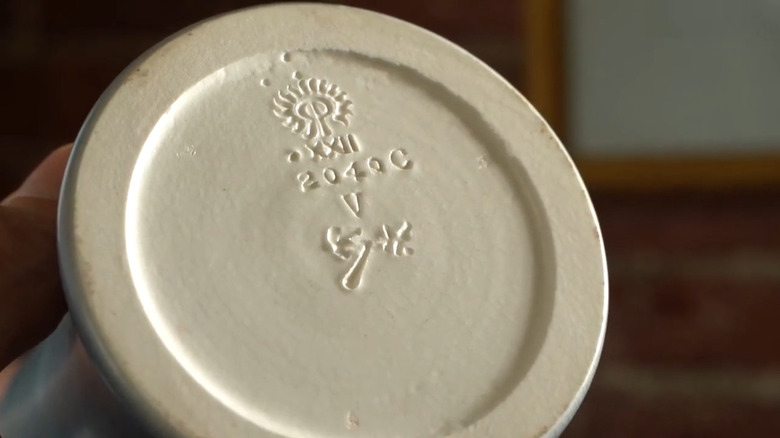
When you’re examining a potential Rookwood piece, look for a stamp on the bottom. The early stamps just said “Rookwood,” but in 1886 they started using a backwards “R” next to a “P,” adding a flame for each year until 1900. Counting the flames can help date pre-1900 Rookwood ceramics. After that, they started using Roman numerals for the dates. You might also spot artist ciphers, monograms, or signatures on some pieces. There are also special “S” marked pieces that weren’t part of a production line.
Pay attention to the glaze and texture too. The earliest Rookwood stuff had a standard clear glaze in earth tones. Later years brought in colorful glazes like Iris, Black Iris, and Vellum, going beyond the earlier matte finishes. You’ll notice the glaze has a nice smooth, deep quality to it. Some subtle imperfections and crazing (tiny cracks) from the handcrafted process are also common. If you stumble across a Rookwood piece, you can check online databases to see what it might be worth – whether you want to keep it or sell it.