

Emilia Noman/Shutterstock
We may receive a commission on purchases made from links.
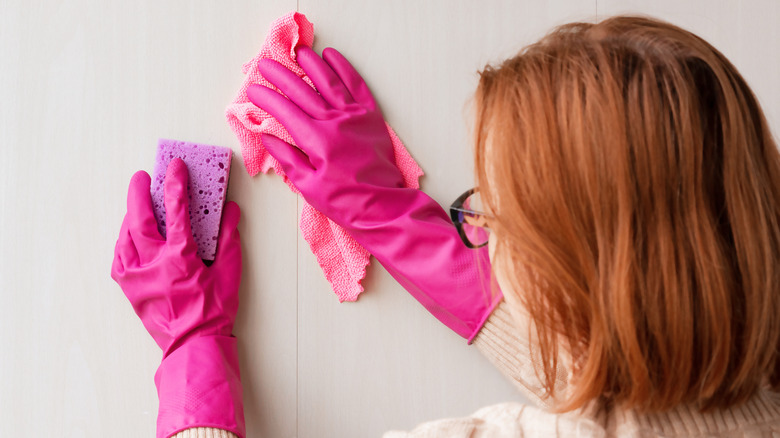
Cleaning walls doesn’t have to be a big hassle. With the right sponges, you can easily freshen up your walls and get them looking spotless. The best sponges for the job are polyester sponges for a general clean, and melamine foam and dry chemical sponges for tackling stubborn stains or marks.
Before getting started, make sure to give the walls a quick dusting to remove any loose dirt or dust. Then, depending on the sponge you’re using, you can add a bit of mild cleaning solution or just use plain water. Go easy on the pressure, especially if your walls have a flat or matte finish. Once you’re done cleaning, be sure to pat the walls dry with a clean cloth.
How to choose the best sponge for different types of wall cleaning
Nadezhda Akimova/Shutterstock
For a quick refresh, polyester sponges are a great all-purpose option. They’re soft yet durable, so you don’t have to worry about damaging the paint. Plus, they’re inexpensive and easy to find. In between deeper cleanings, you can even use these sponges for other household tasks like kitchen or outdoor cleaning.
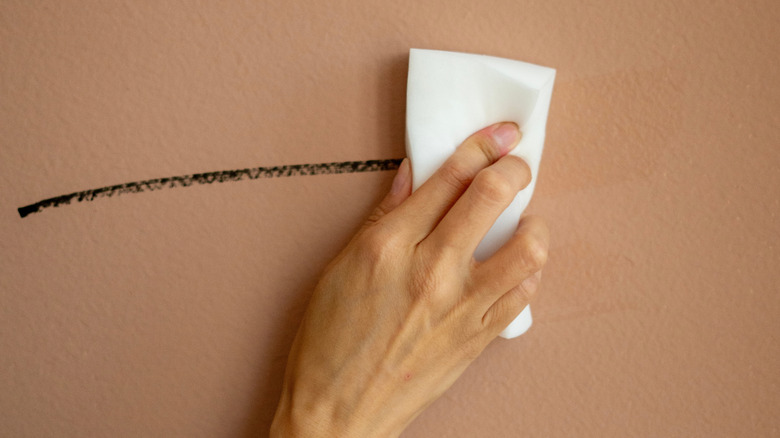
If you’re dealing with stubborn scuffs, marks, or stains, melamine resin sponges are your new best friend. These sponges are great at tackling tough spots without needing any extra cleaning products. Just wet the sponge and gently work on those problem areas.
For walls that are looking dingy from environmental factors like pollen or smoke, dry sponges (also known as chemical sponges) are the way to go. Their unique rubber structure traps all kinds of dirt and grime. You can wash these sponges after use or just cut off the top layer to get more life out of them.
How to clean your walls with these sponges
Robynroper/Getty Images
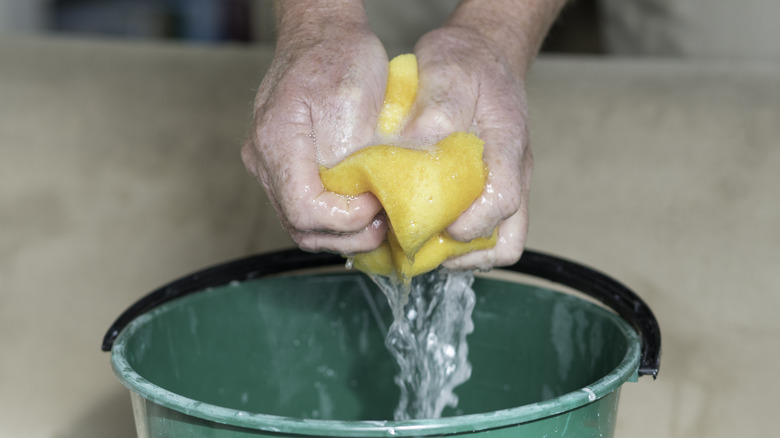
The cleaning method will vary depending on the type of sponge you’re using. For a basic clean with a polyester sponge, you’ll want a bucket of water mixed with a mild detergent and another bucket of rinse water. Melamine sponges don’t need any detergent – just dip them in plain water. And dry sponges work best when they stay completely dry.
When using a melamine sponge, be gentle and test it on a small, inconspicuous area first. These sponges can be a bit more abrasive, so you don’t want to risk removing any paint. And for dry sponges, you’ll want to work from top to bottom, instead of in circular motions like with a polyester sponge.
The dry sponges are great for capturing dirt and grime, but they may not fully remove deeply ingrained stains. In that case, you can follow up with a melamine sponge to tackle those tougher spots.
