


So your old car’s seen better days, or maybe you’re one of those millions of Americans without wheels right now. Whatever’s pushing you toward a new ride, here’s some solid advice: pump the brakes before rushing to the dealership. It actually pays to wait until you’ve got some cash saved up first. There’s this handy guideline called “the $3,000 rule” that helps you figure out if you’re really ready to make the leap. Basically, it says you should stash away at least three grand before buying a car. And when you start adding up everything that actually goes into owning one, you’ll see why this rule deserves your attention.
Whether you’re eyeing a brand-new beauty or a used ride, don’t just focus on down payments and sticker prices—there’s way more to it than that. Sure, those things matter, but they’re just the tip of the iceberg when it comes to car ownership. You’ve also gotta think about registration, insurance, routine maintenance, and gas (the average American drops over $200 a month on fuel, by the way). The $3,000 rule gives you that nice financial buffer you’ll need. Reality check: $3,000 might barely scratch the surface when you add up all your yearly car costs. But as a baseline? It’s a smart starting point to help you buy a car without completely tapping out your savings.
The $3,000 rule covers way more than just what the car costs
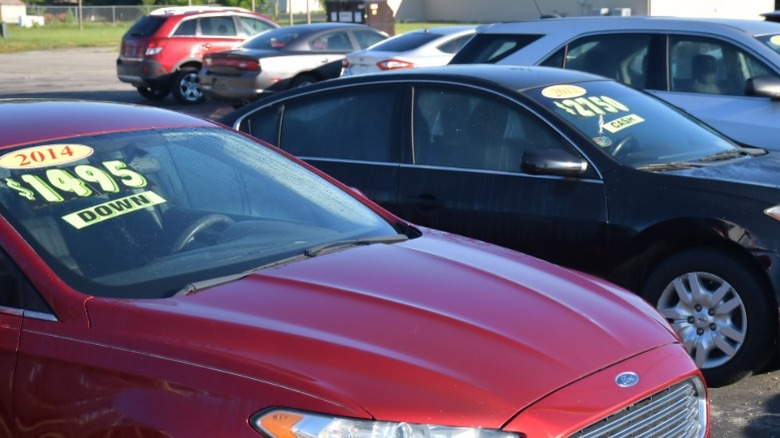
You could throw that $3,000 toward your down payment, but here’s the thing—most new cars in 2026 run you over $20,000, so that three grand might not cut it. That said, every dealer’s different. Some actually let you drive off the lot with little to nothing down—though fair warning, those deals usually mean fatter monthly payments and a longer loan. Still, having that $3,000 tucked away helps. Plus, since cars lose value super fast in those early years, three grand can actually cover a decent chunk of what older used cars go for.
The $3,000 rule has become so popular that auto dealers all over the country have dedicated whole sections of their websites to explaining it. If you’re currently sitting at less than three grand in car funds, the rule basically says: hold off. Don’t buy yet. The idea is to protect your wallet, your credit score, and your future ability to get a car. Think of it as setting yourself up for success. If you can’t scrape together $3,000 for a vehicle right now, chances are you’re not quite ready to make that purchase.