We may earn a commission on purchases made through our links. You know how they say close only counts in horseshoes and cornhole? Well, as a DIYer, you’ll learn the hard way that this is totally true. Sure, it might seem like any extension cord will work for your air compressor or that any old screw is fine for outdoor projects, but here’s the thing — “close enough” can actually backfire big time. When it comes to French drains, picking standard landscape fabric instead of a non-woven geotextile designed to let water through while keeping soil out can wreck your whole setup. The problem? That tightly woven landscape fabric is built to block weeds, which means instead of creating a working French drain, you end up with a hydraulic plug that stops water from draining at all. Here’s the thing about woven landscape fabric — it’s bad news for your French drain no matter what kind of soil you’ve got. The pores are simply too tight to let water flow through without trapping those tiny dirt particles. As water tries to squeeze through the landscape fabric, it picks up fine soil particles, and those particles get stuck on the fabric right where the water’s trying to get in. The more particles pile up, the less water can pass through. That’s how you end up with a hydraulic plug. Since French drains are meant to handle serious amounts of underground water pressure, this basically turns your whole drainage system into a wall. Mariana Serdynska/Shutterstock
Picking the right fabric and method for your French drain
 FieldWorksVIsuals/Shutterstock
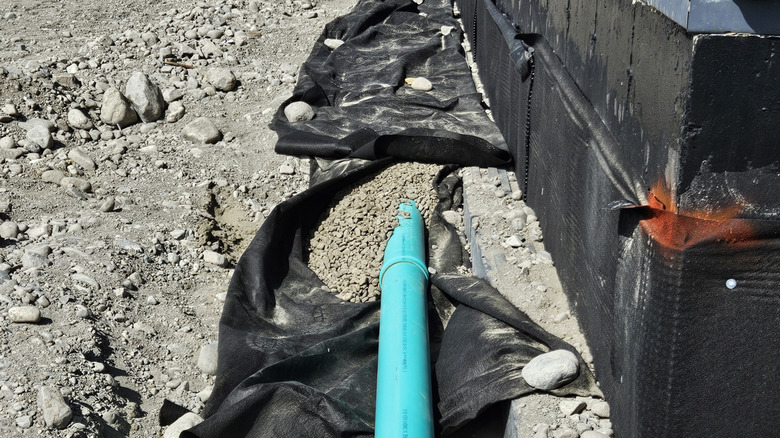
 Lots of folks get confused about what type of landscape fabric or geotextile to use — or even whether you should use any — for a French drain. But the answer is actually pretty straightforward. Think of how road crews build their drains. They use DOT-certified geotextiles made from polypropylene fibers for French drains. The key difference? These fabrics aren’t woven. Instead, they’re needle-punched, which lets water and fine particles travel through while keeping bigger soil particles where they belong.
This fabric approach works great for a French drain when you wrap the whole trench in it — pipe, drainage rock, and all — kind of like a burrito. You’ll get better water flow, less sediment buildup, and your drain can handle heavy downpours or spring snowmelt without a problem.
Geotextiles come in different weights, and heavier fabrics give you more durability. For most home French drains, you can go with either a 4-ounce or a beefier 6-ounce fabric. A product like this works perfectly for residential use. Plus, it’s versatile — non-woven geotextile does double duty under mulch too, even though regular woven landscape fabric won’t cut it for drainage. According to the maker, this 4-ounce material handles up to 140 gallons of water per minute per square foot, which is more than enough for most residential setups.
Extra tips for building a French drain that actually lasts
 Mariana Serdynska/Shutterstock
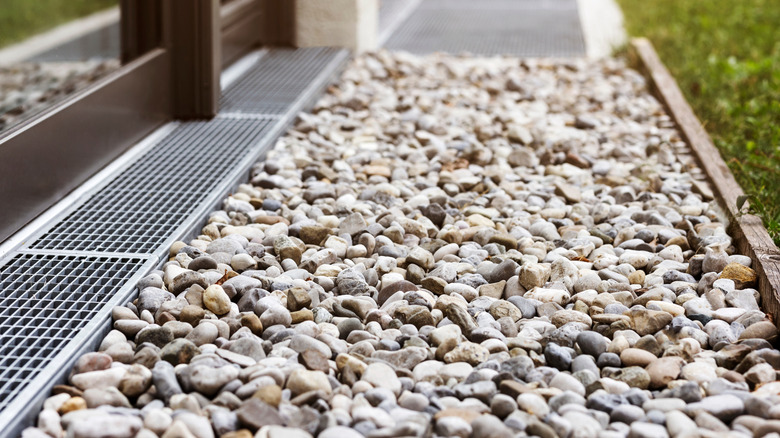
 When installed right, a French drain can last several decades. But mess up the materials or installation, and it might fail within a year. While fabric matters for all the reasons we covered, it’s not the only thing that counts. Pairing non-woven geotextile fabric with washed round stones and a perforated collection pipe that slopes consistently gives you a system that really works. Once water gets into the pipe, it can move quickly to wherever it’s going — a dry well, storm sewer, or another outlet.
Your soil type is also super important. Clay and silt soils, which have those really fine particles, usually do better with fabrics that have tighter openings. Sandy soils have bigger particles, so they can handle looser fabrics and still filter well. Here’s the reality though — French drains don’t last forever and eventually clog up. If you’ve got fine soil, you’re really fighting an uphill battle since nothing can stop those tiny particles and let water through at the same time. You’ll usually know your French drain has failed when you see water pooling in your yard after rain. When that happens, you might need to dig it up and install a new one. The good news? If you pick materials that match your soil and what you’re trying to do, you might only have to dig that trench once.