
We may receive a commission on purchases made from links. More and more people across America are jumping into DIY projects—whether it’s to save some cash, show off their home improvement chops, or recreate something cool they spotted on social media or a home renovation show. That said, a survey revealed that 70% of homeowners run into problems with their DIY plans. The biggest culprit? Not having the right tools—26% of people cited this as the main reason their projects didn’t turn out great or stayed unfinished. So we reached out to a couple of carpenters to get the inside scoop on their favorite tool brands and what they’d suggest for DIY work. In a chat with House Digest, Jesse Cupples, a finishing carpenter at, shares that Festool is his personal go-to pick. But here’s the thing—you don’t need to splurge on premium brands, he explains. After testing pretty much every major brand over the last couple of decades, he says “[I] would say for your average homeowner the go-to tool brands would be DeWalt, Makita, RIDGID, or Ryobi. All these brands are priced similarly, and they’ll definitely get the job done.” Peter Kravchuk, a contractor, carpenter, and founder of, has a slightly different take. “I’d recommend going with Milwaukee. They’ve got a solid range of tough, flexible products that let you build out a toolkit with a drill and tons of other tools that all run on the same battery system,” he told House Digest exclusively. Hryshchyshen Serhii/Shutterstock
Builders Pick Their Favorite Tool Brands for Home Projects (Here’s Why)

Why our experts love these woodworking tool brands
 Henry Saint John/Shutterstock
 When asked why he recommends Milwaukee, Peter Kravchuk tells us that “the big win is convenience: the tools work well and are super easy to handle. You get that sweet spot of professional quality without sacrificing user-friendliness.” Based on what he’s seen, most folks who pick up these kinds of tools end up using them for all sorts of home projects down the line. That’s why he thinks it makes sense to invest in quality gear from the start.
“Plus, Milwaukee’s battery system is a game-changer because you can use the same battery for a bunch of different tools,” Kravchuk explains. He also points out that their tools are built tough and can handle some rough treatment without breaking a sweat. “Tools get dropped, hauled around, used in dusty conditions, and dealt with in all kinds of ways,” he says, “so having gear that can take a beating without falling apart mid-project is huge.“
Jesse Cupples recommends DeWalt, Makita, RIDGID, and Ryobi because “all these tool brands now have cordless versions of most of their stuff. That means it’s way easier for the average homeowner to knock out projects around the house.” You won’t stress about cord length or making sure you have space to work. Plus, you’re saving yourself the hassle of dealing with extension cords—one or multiple. Just keep in mind that how long the battery lasts depends on the tool and how hard you’re working it, so you might want to grab a couple extra batteries for bigger jobs. And yeah, batteries and chargers might cost you a bit extra.
The specific carpentry tools these expert picks are known for in DIY work
 ungvar/Shutterstock
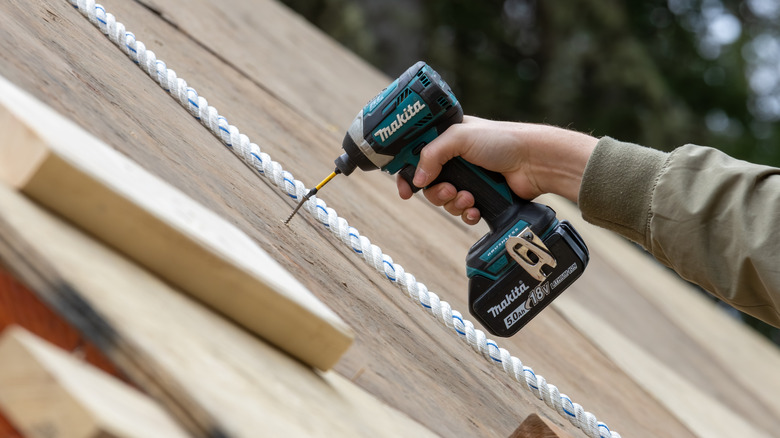
 While there are tons of options out there, Peter Kravchuk’s got three favorite tools for DIY carpentry projects. In his exclusive chat with House Digest, he kicks things off with the impact driver. “Whether you’re building shelves, hanging cabinets, framing up a structure, or creating something for the outdoors, it drives screws faster than anything else without the wrist strain you get from drilling when you’re putting in tons of screws,” he shares.
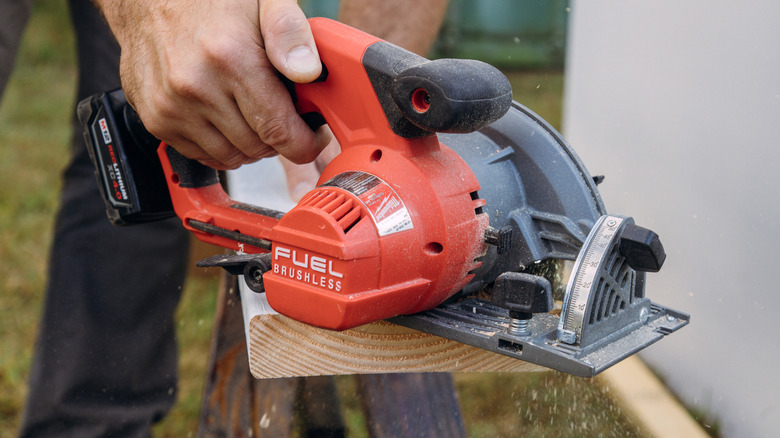
His next pick is the circular saw. “It’s got serious power to handle all kinds of framing wood, plywood, or standard building materials, which is perfect for DIY folks working on deck projects, building or fixing cabinets, remodeling, or anything else where cords just get in the way,” he explains. The company even says this tool can make around 750 cuts on a single charge and works faster than a 15 amp corded version. His final recommendation is the oscillating multi-tool. “It’s super handy for renovation work—trimming materials, undercutting door frames, making plunge cuts through different materials, or tackling jobs where the bigger tools just won’t fit,” he notes.
When it comes to Ryobi, DeWalt, RIDGID, and Makita, Jesse Cupples has specific recommendations for House Digest. “I’d say the essential tools you need are an impact drill and driver, circular saw, reciprocating saw, and multi-tool,” he says. With that lineup in your toolbox, he adds, you’ll be able to take on all kinds of DIY projects around the house.