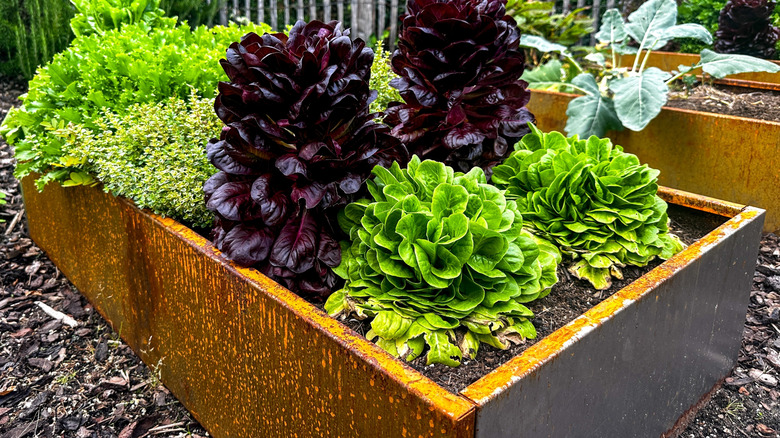
We may get a commission if you buy something through the links on this page. If you’re checking out DIY raised garden beds, you’ve probably seen tons of tutorials using concrete blocks. Sure, they’re affordable and work pretty well for lots of gardeners. But here’s the thing — building with concrete blocks takes forever. Plus, some blocks might have toxins that aren’t great if you’re growing food in them. If you want a tough garden bed that’s a breeze to set up, Corten steel might be exactly what you’re looking for. Corten steel is a tough weathering steel that’s made from a chromium-copper blend. When you use it outside, it forms a gorgeous, rust-resistant patina — basically a protective rust layer — that keeps it safe from the elements. The patina starts out as this burnt orange color and gradually shifts to a deep purple over time. Here’s the cool part: unlike regular metal, this rust isn’t a bad thing. It actually makes Corten steel super resistant to weather and damage. Some folks worry the rust might mess with their plants, but don’t stress — nothing harmful leaks into your soil. Actually, the rust process might even help your plants by releasing helpful micronutrients like iron, manganese, copper, zinc, and tiny bits of nickel. Corten steel garden beds have thinner walls than alternatives made from materials like bricks, concrete blocks, or wood. That means you get more room for planting. On top of that, your soil warms up faster when spring arrives, so you could get your seedlings in the ground sooner. Pretty neat, right? The catch? Corten steel isn’t cheap — you’re looking at about $75 to $150 per square foot. That said, it’s built to last, so you probably won’t need to replace your garden beds for decades, which could save you cash in the end. fotodrobik/Shutterstock
Getting your Corten steel garden bed ready
 Alonia/Shutterstock
 Ready to get a Corten steel planter in the ground? First, think about what you need. You can grab a pre-made bed or buy individual panels to build exactly what works for you. When everything shows up or your pre-assembled garden bed arrives, it’s time to pick the perfect spot. Look for somewhere that’s easy to reach, has great drainage, and gets enough sun for whatever plants you’re planning to grow. Keep in mind that a rusty-colored stain will form below the Corten steel bed. While it won’t hurt the environment, it can mark anything porous, like concrete or natural stone. Your best bet is to put your garden bed straight on soil or gravel. Once it’s in place, just fill it with dirt and plant away.
Your Corten steel will start to rust after about two months and look totally rusty in roughly two years. Want to speed things up? Mix 2 ounces of vinegar, ½ teaspoon of salt, and 16 ounces of hydrogen peroxide in a spray bottle. Spray it on your garden bed’s sides and let it dry. Keep doing this until you like how it looks, then seal it with a Corten steel sealer or something similar. The main thing that messes with Corten steel’s durability is really humid air and salty sea spray. If you’re in an area with super moist air or lots of salt spray, Corten might not work for your raised beds. Check out something else instead, like Aluzinc-coated galvanized steel.