Since thousands of cyclosporiasis cases popped up across the country starting in May 2026, health officials have been working hard to track down where these outbreaks are coming from. They haven’t nailed down the exact source yet, but Michigan authorities—where close to 3,800 cases have shown up—are pointing fingers at lettuce and salad greens as potential culprits. If you’re worried about catching this stomach bug, you might be thinking about growing your own veggies instead of hitting up the grocery store. But here’s the thing: is homegrown actually safer? Well, experts say it can be, but honestly, homegrown produce isn’t completely risk-free either. Before we dive into whether you should stress about cyclosporiasis from your backyard garden, let’s back up and talk about how this thing spreads in the first place. Cyclosporiasis comes from a parasite called Cyclospora cayetanensis, and it travels through human waste. When contaminated fecal matter ends up touching food or water, anyone who eats or drinks that stuff can get sick. You’ll usually see cyclosporiasis tied to foods like packaged salad mixes, berries, snow peas, and certain herbs like basil and parsley. You might be thinking: if I’m healthy and don’t have cyclosporiasis, how would parasites even get on my homegrown food? Good question—there are actually a couple of ways this could happen. One way is if you water or rinse your plants with contaminated water. Another way is if your soil has been tainted with parasites, which can then spread to your fruits and veggies. So yeah, eating your own produce might lower your risk, but it’s not a guaranteed way to dodge cyclosporiasis. Aleksandarnakic/Getty Images
Tips for steering clear of cyclosporiasis when eating homegrown produce
 Vachilavit Sanameang/Getty Images
 According to Rodney Rohde, a professor at Texas State University, “Home-grown produce and farmers’ market produce can be lower risk if produced using safe water, good sanitation, and sound agricultural practices, but they are not inherently safer than commercially grown produce.” And here’s the catch—there’s really no way for home growers to test their soil or water for cyclosporiasis.
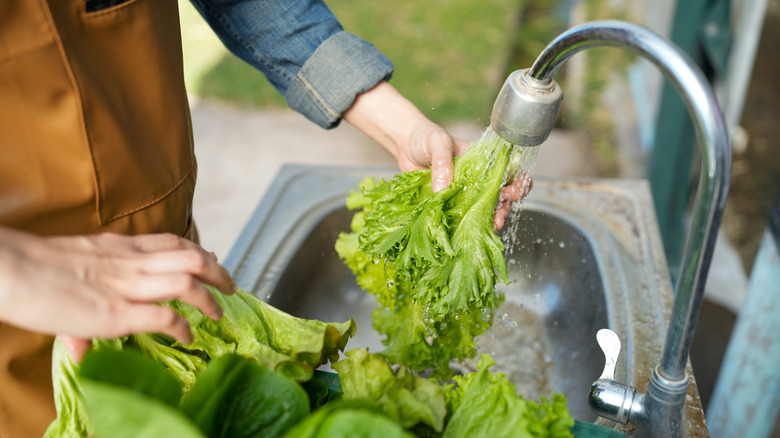
So what can you do about it? There are definitely some basic food safety moves you can make to cut down your chances of catching cyclosporiasis from homegrown produce. First up, the Centers for Disease Control and Prevention recommends washing fresh produce with running water. The Michigan Department of Health & Human Services suggests peeling away the first couple or three outer layers of leafy stuff like lettuce or cabbage before washing the rest with clean running water. Make sure you also toss the outer layer of anything you’re eating raw. Don’t forget to scrub your hands for at least 20 seconds with warm soapy water before and after handling raw fruit and veggies—this helps keep your kitchen surfaces from getting contaminated too.
But here’s the reality: even though washing helps reduce the risk, it’s not foolproof. Your safest move is to cook your produce before eating it. “Heating the food to at least 70 degrees Celsius or 158 degrees Fahrenheit is the most effective way to kill this parasite,” according to Dr. Nuwan Gunawardhana, an epidemiologist and infectious disease specialist at Columbia University Irving Medical Center. Once you do that, you can dig in and enjoy everything you’ve worked to grow.