
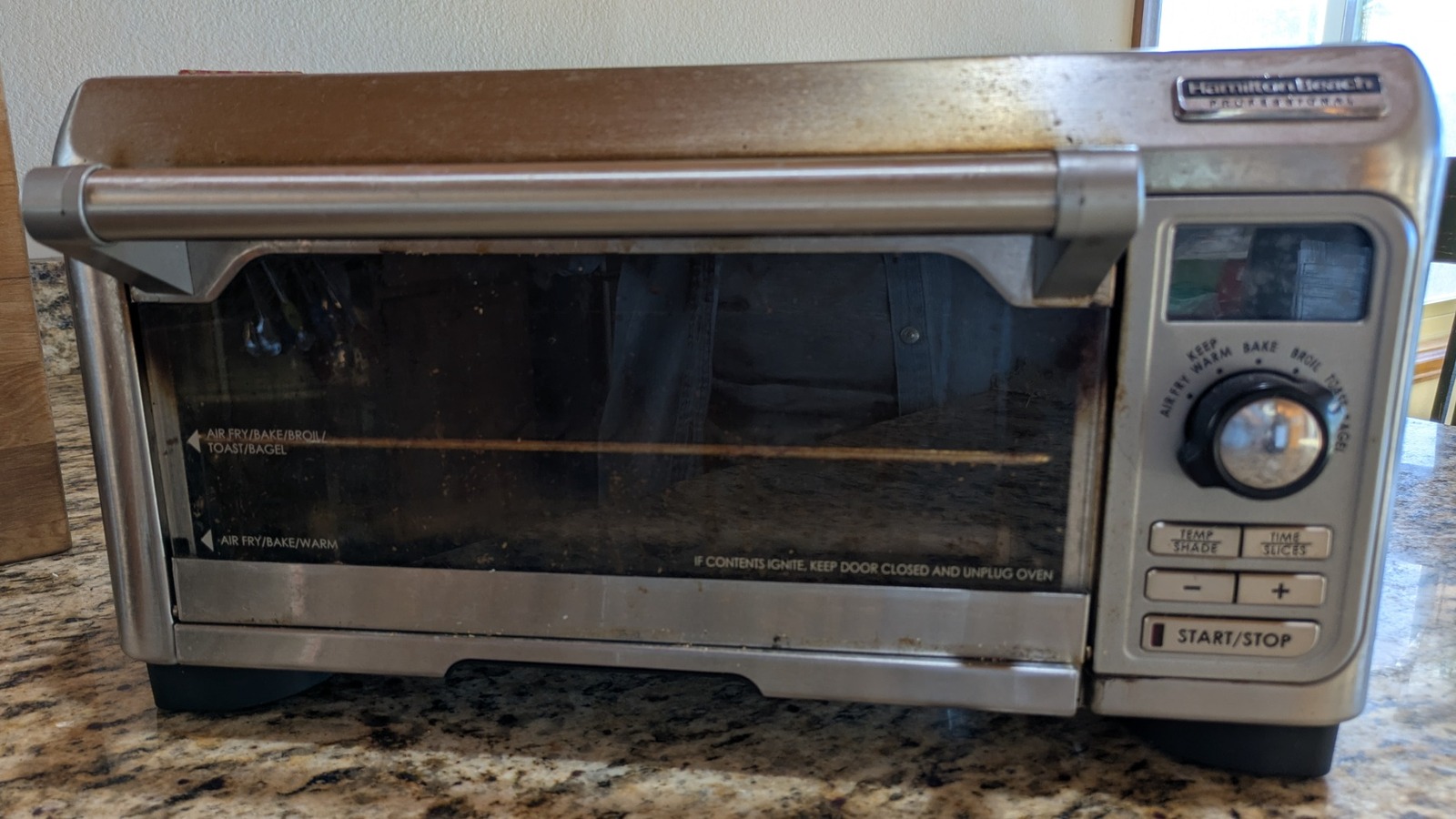
Grimy microwaves drive me absolutely crazy. You’d think I’d feel the same way about toaster ovens — I mean, they’re basically the same thing, right? But honestly, I’d completely neglected mine for over a year without giving it a real deep clean. With company on the way, it was definitely time to get that toaster oven looking less disgusting. I’m all about cleaning hacks that use basic stuff you already have and won’t break the bank. I’d stumbled across some tips online about using hydrogen peroxide and baking soda to scrub away burnt-on grease from baking sheets, and I figured why not give it a shot? My toaster oven’s rack and drip pan were caked with months of buildup that regular dish soap and water couldn’t touch. Would this cheap combo work where dish soap and vinegar had failed? According to what I’ve seen on TikTok, you’re supposed to mix baking soda and hydrogen peroxide into a thick paste, slather it all over your greasy, stained surfaces, and let it sit for about eight hours or overnight. The online creators swear it’ll eat away all that nasty gunk on metal baking sheets like magic. The recipe doesn’t specify exact amounts — you just make it thick enough to spread around. Since I had both ingredients sitting in my cabinet and the whole process seemed super easy, I figured I’d give it a try and see if my toaster oven could get back to looking decent.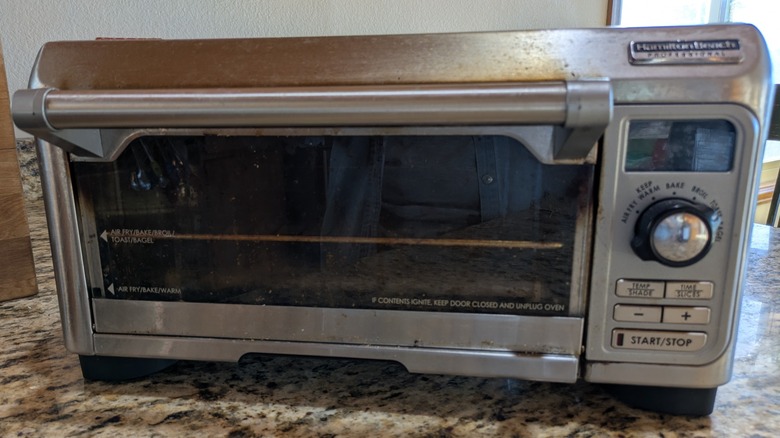 Lindsay Donaldson/House Digest
We Tested A Popular Cleaning Trick To Remove Baked-On Grease, But It Didn’t Work As Expected
What you’ll need and how to get started
 Lindsay Donaldson/House Digest
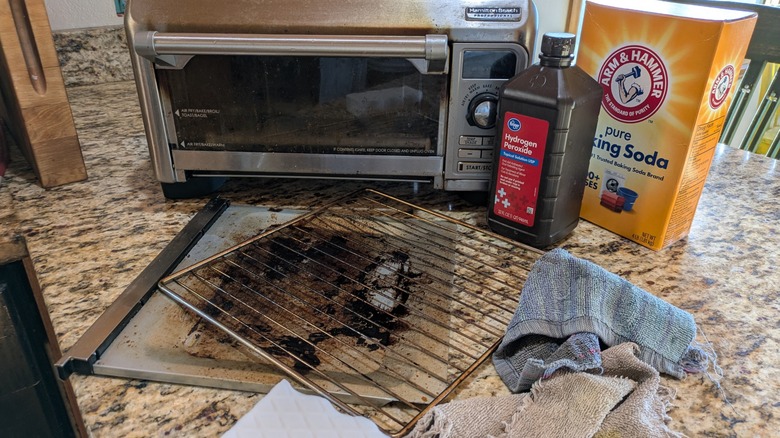
 Before I got started, I wanted to double-check that mixing these two ingredients was actually safe. Some stuff — like bleach paired with acids such as vinegar or lemon juice — creates seriously dangerous fumes when combined. Fortunately, I did my homework and confirmed that hydrogen peroxide and baking soda play well together and are totally safe to use as a cleaning team, so I felt good moving forward.
I grabbed some rags, a Magic Eraser, and a relatively new bottle of store-brand hydrogen peroxide from my cleaning supply stash. Then I pulled out my box of Arm and Hammer baking soda from the pantry. Once I had everything laid out on the counter, I realized that using a Magic Eraser might skew my results — after all, those things can tackle practically anything, so I decided to save it for another project.
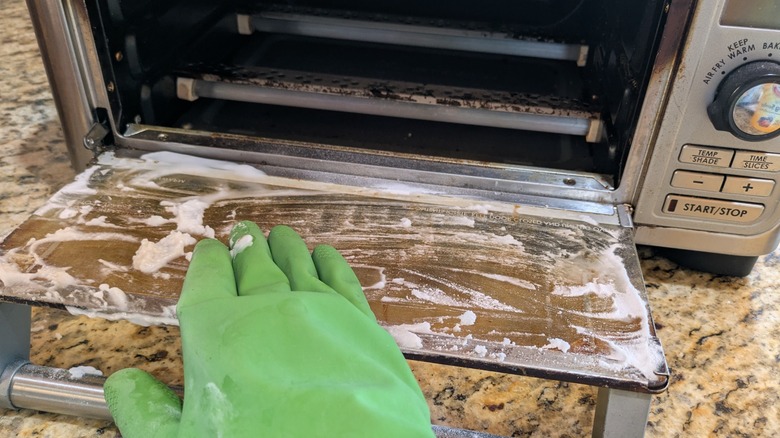
First things first: I unplugged the toaster oven, took it apart, and cleared out all the loose crumbs. Then I set the rack and drip tray on baking sheets and piled baking soda generously on both, plus inside the oven door. Next, I poured hydrogen peroxide over everything in equal amounts. With gloves on, I mixed it all together and spread the paste evenly across every surface. Then I walked away and let it do its thing. I was hoping that after eight hours, I’d come back to a sparkling clean toaster oven with not a speck of grease in sight.
Was there a squeaky clean toaster hiding under all that paste?
 Lindsay Donaldson/House Digest
 Eight hours later, I threw on my gloves and started wiping away the dried baking soda and hydrogen peroxide crust with a damp rag. As I peeled back flakes of the paste, I noticed the metal and glass looked basically the same as before I’d started. Hmm. Maybe I needed to soak the paste with a little water first to loosen it up? The instructions did mention scrubbing gently and then rinsing with soap and water, so maybe my light wiping wasn’t aggressive enough? Could a more serious round of scrubbing and soaping have made the difference?
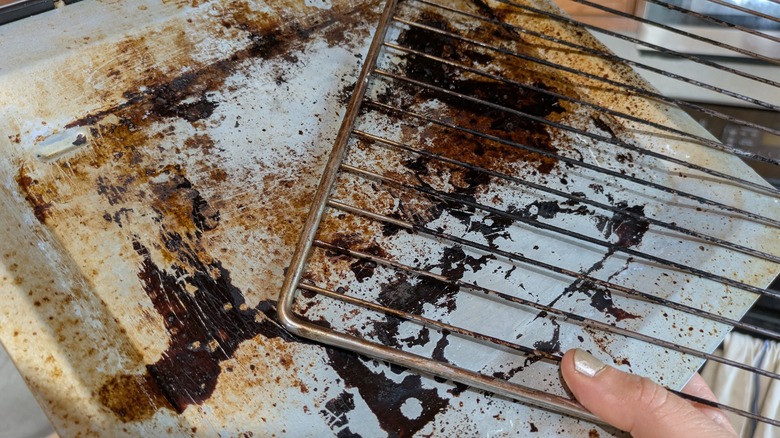
Not totally convinced I’d given it my best shot, I decided to try again. This time, I’d wet the paste first to soften it, then scrub a little harder before hitting it with soap and water. Since “overnight” is pretty vague, I let it sit for about 18 hours this time — mostly because that’s what my schedule allowed. Even with that extra time and way more elbow grease, the baked-on stains didn’t budge much. At least now I knew for sure that this method wasn’t cutting it. Even though I really don’t love the idea of using aluminum foil lining in kitchen appliances, I’m pretty sure trying that approach would work better.
The hydrogen peroxide and baking soda combo just didn’t work
 Lindsay Donaldson/House Digest
 This cleaning hack just didn’t work out for me, though I get that year-old, baked-on grease is pretty stubborn stuff. I really did put in the effort — fresh hydrogen peroxide, extra time, and some serious scrubbing with soap and water. My final verdict? This two-ingredient paste isn’t strong enough to tackle old, caked-on grease. That said, if all those shiny cookie sheets popping up in videos are for real, then maybe the trick works better on newer stains that haven’t had time to set in.
On a whim, I asked my Alexa if altitude could be affecting how well hydrogen peroxide or baking soda work, since I’m up at 8,500 feet. Altitude can definitely throw a wrench in everyday tasks like baking, so when Alexa said yes, I got curious. I tried hunting down some solid scientific info on the topic, but I couldn’t find anything I really understood. So now I’m wondering if someone living closer to sea level would’ve had better luck with this whole thing.
Look, the ingredients are safe, super cheap, and the whole process is pretty low-effort, so I’m not going to tell you not to try it. Maybe your toaster oven’s grime won’t be as stubborn as mine. It might actually be worth testing out this hydrogen peroxide and baking soda combo on your own toaster — just maybe skip it if you live way up high in the mountains!