
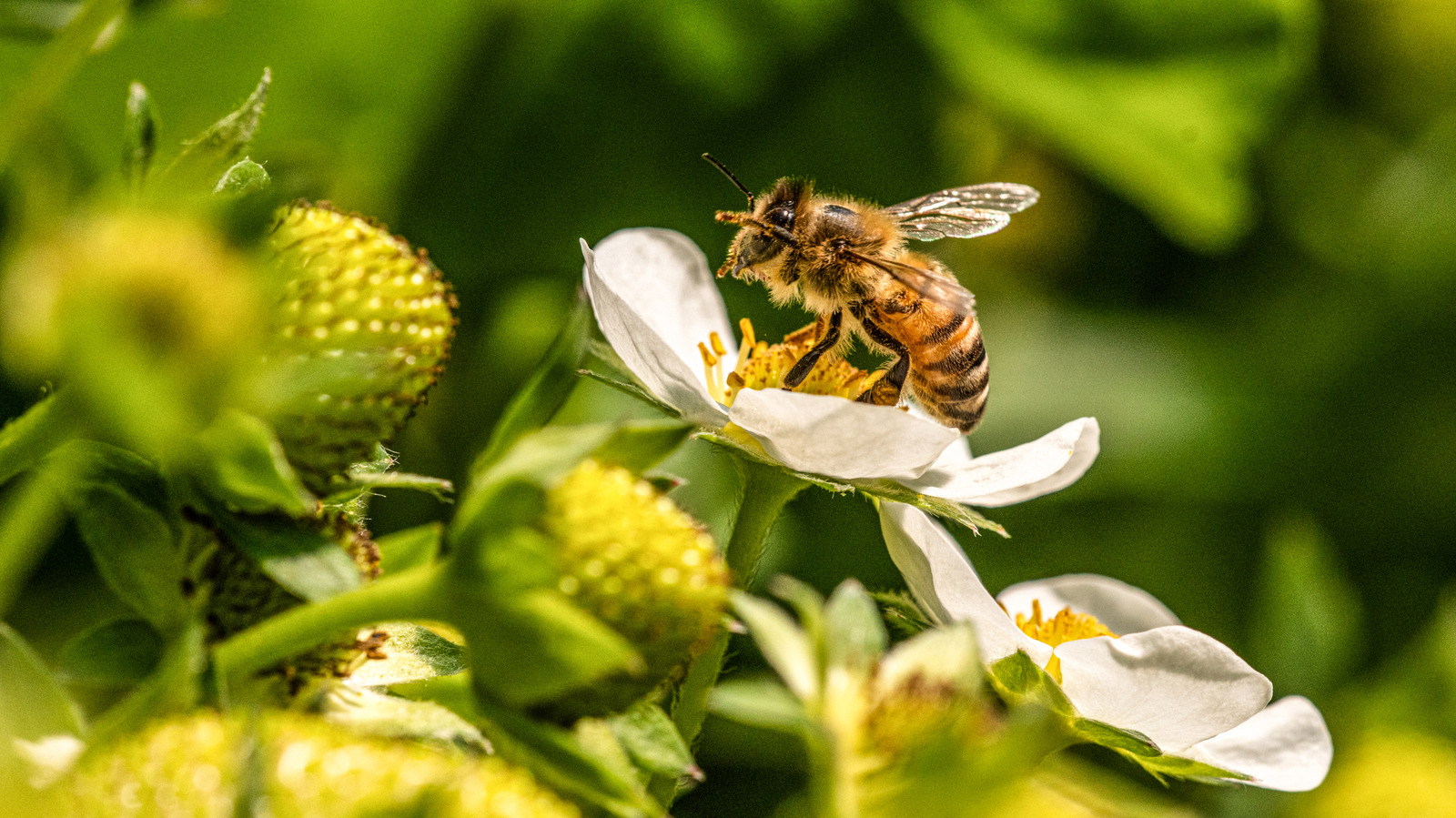
Strawberries are pretty unique in how they form, which means solid pollination is super important. Those little seeds you see? They’re called achenes—tiny one-seeded fruits that pop up after the flower’s ovules get fertilized. Here’s the thing: strawberry flowers have around 200 ovules, and each one needs to get pollinated to make a full, gorgeous berry. When an ovule gets pollinated, it tells the plant tissue around it to puff up and become the berry flesh. Skip proper pollination and you’ll end up with those wonky, deformed berries that look a bit off. The better the pollination, the bigger, rounder, and prettier your berries will be. If you’re growing strawberries, you’ll want to do everything in your power to keep pollinators buzzing around your beds during flowering season. As someone who loves gardening and permaculture, companion planting is my go-to technique. I plant everything with a buddy system, thinking about biodiversity, pollination, and keeping pests and diseases at bay. With strawberries, the smartest move is to bring in pollinator-friendly plants, and borage (Borage officinalis) is honestly one of the best choices out there. This herb has been used to attract pollinators for ages, and scientists have actually studied how well it works. The University of Sussex did research showing that strawberry patches grown with borage produced 35% more fruits and 32% more yield by weight compared to plots without it. Plus, the fruit quality was noticeably better. Borage is a fantastic choice because it thrives in tons of different conditions and doesn’t need much fussing—just keep an eye on its self-seeding habit so it doesn’t take over.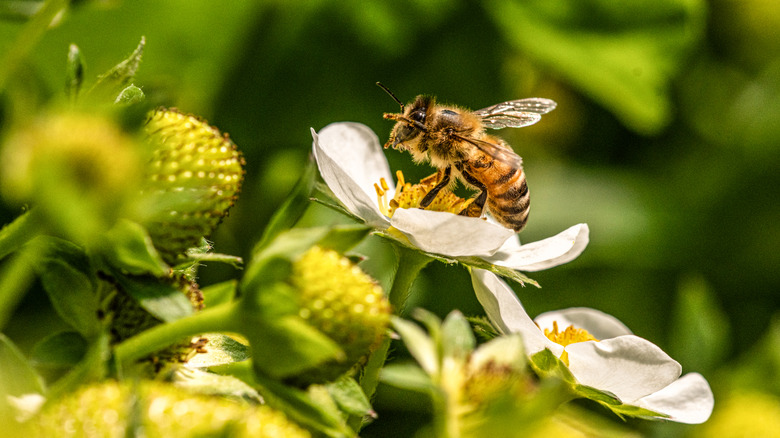 Matteodestefano/Getty Images
Best Flowers To Plant With Strawberries For More Pollinators
Why borage is such a game-changer for strawberry pollination
 Heilieh Sanders/Getty Images
 Borage is such a winner as a companion plant for strawberries and lots of other plants, mainly because it’s incredibly easy to grow. It handles all kinds of conditions and once it takes root, it basically takes care of itself. On top of that, it self-seeds like crazy. Once you plant borage, you probably won’t ever need to buy more plants again. In my gardens, borage has seeded itself all over the place—in the borders, along the hedgerows, and even in the thin, rocky soil by my driveway. Just let it do its thing. That said, if you’re worried about it spreading too much, you’ll need to stay on top of trimming it back or pulling up new seedlings as they appear.
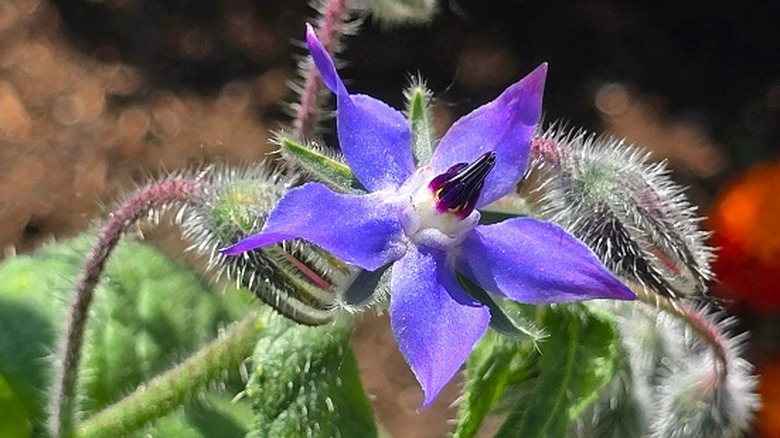
Borage has gorgeous star-shaped blue flowers, and here’s the cool part: unlike a lot of flowering plants that hide their nectar deep inside long tubes where only long-tongued bees can reach, borage flowers have shorter tubes. This opens the door for way more types of pollinators to grab a snack, not just honeybees. While borage can handle lots of conditions, including dry spells, it really shines in a sunny spot with good drainage. In shade, you won’t get as many flowers, so you’ll miss out on all that pollinator activity. The best part? This plant flowers nonstop from early summer through fall, so you get a continuous supply of blooms the whole time your strawberries are making fruit.
How to grow borage next to your strawberry bed
 Matchou/Shutterstock
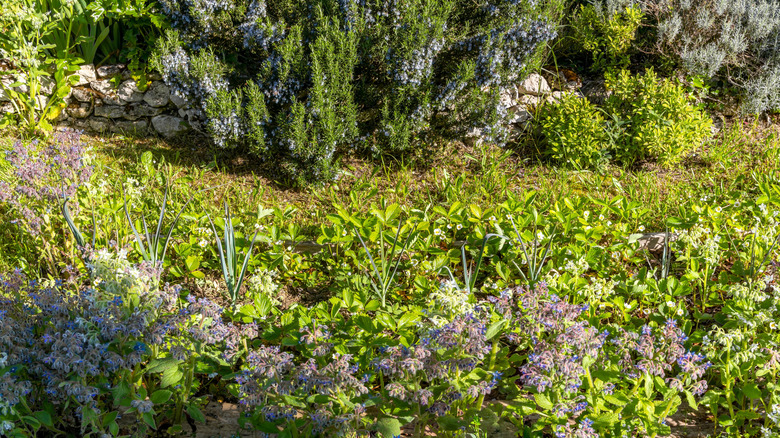
 You can sow borage seeds directly in the ground once the frost danger has passed. It’s a straightforward plant. You’re better off planting it where you want it to grow rather than starting it in trays, since borage has a taproot that doesn’t appreciate being moved around. Stick it in a sunny spot with soil that drains well. It’s pretty laid-back about soil conditions, but it actually prefers soil that’s not super rich—which is why mine loves the thin, rocky soil along my driveway. I’d suggest planting borage around the edges of your strawberry beds in small clusters, since mature borage plants can reach about two feet tall and wide. You don’t want it shading out your strawberries by crowding them.
One heads-up: borage is toxic to dogs, cats, and horses, so keep that in mind if you have any of those pets hanging around. My animals have never shown interest in it anyway—they’d rather nibble on other stuff like cleavers and couch grass. Just be aware if your pets are the type to munch on everything they see in the garden. If you’ve only got room for one companion plant with your strawberries, borage is my top pick. If you can fit a few more, I’d add marigolds since they’re amazing at bringing in pollinators and can help keep slugs away. Catnip is another solid choice because it helps cut down on pests. Since basically everything wants to eat strawberries, the more backup you can get fighting off pests, the better.