

July Alcantara/Getty Images
Turns out there are a bunch of ways you can mess up when it comes to leftover tile grout, like not properly getting rid of it. Sure, it might be tempting to just rinse the buckets and tools down the drain, but that’s a recipe for disaster. The grout can harden like cement in your pipes and create a major blockage that’s nearly impossible to remove – you’ll probably have to call in a plumber to cut out and replace sections of your home’s drainage system. Yikes!
To avoid all that hassle, we recommend using a two-bucket method to clean up. Use the first bucket to scrape off and catch the bulk of the leftover grout, then let it sit overnight so the heavy sediment sinks to the bottom. In the morning, you can pour out the clear water on top and be left with just the thick sludge at the bottom. That way, the minerals and chemicals in the grout don’t end up in your local water system. With clean tools and no grout down the drain, you’re all set!
How to safely get rid of the solidified grout leftovers
Xianna/Shutterstock
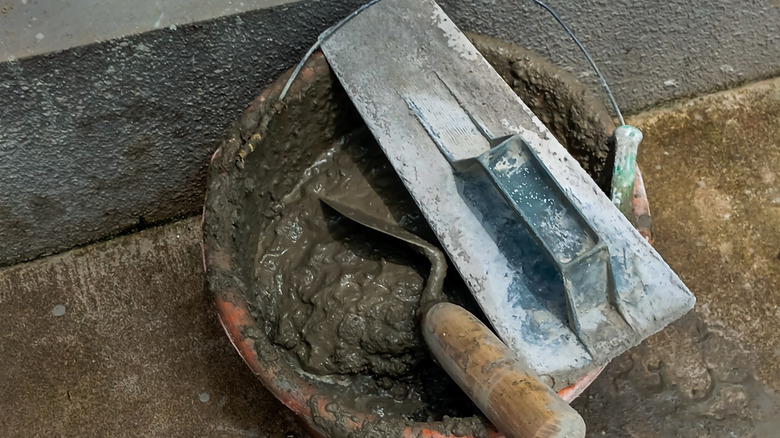
Okay, now that you’ve separated the liquid waste, it’s time to deal with the leftover mixed grout. The goal is to turn that slurry into a solid, which is actually super easy. Just line a heavy-duty trash bag in a bucket and pour in the excess wet grout. Let it sit until it’s completely dried out and hardened into a solid block. Once it’s cured, you can tie up the bag and toss it in the regular trash – no more messy liquid hazard!
Another eco-friendly option is to see if your local recycling center has a place to dispose of hardened “hardcore” materials like this. They’ll crush the grout and reuse it for future construction projects, keeping it out of landfills. Either way, the key is to let that grout fully solidify before getting rid of it. With these simple disposal steps, you can wrap up your tiling project cleanly and start planning your next home improvement adventure!