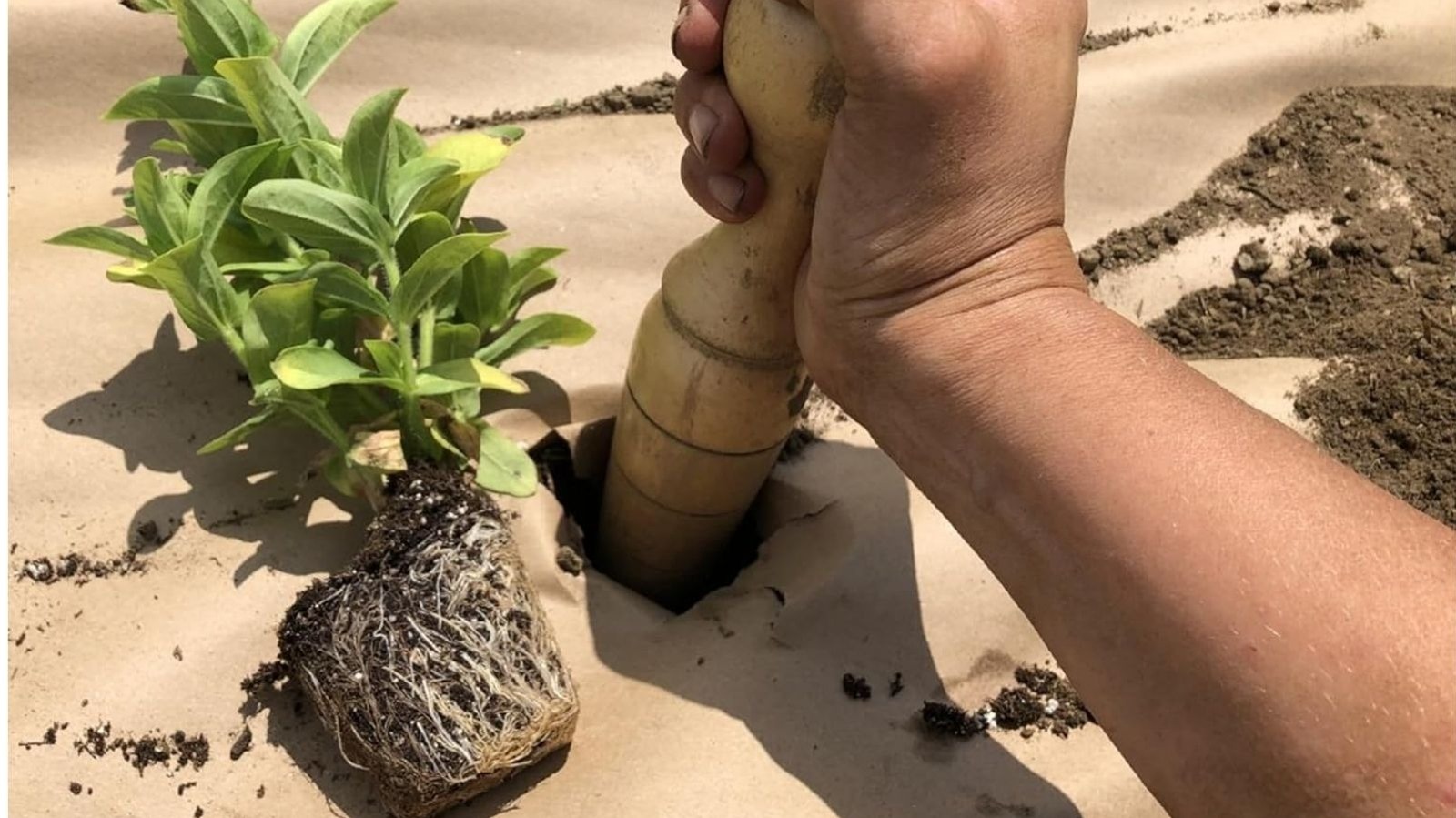
When fall rolls around, most folks yank out their finished flowers from containers and might toss the plant matter into compost. But that potting mix? They usually dump it in a bag and send it to the curb without a second thought. People have been doing this forever, figuring that once potting soil runs out of nutrients, it’s basically trash. Here’s the thing though – even used potting soil still has plenty to offer. If you’re looking to boost your compost, old potting mix is actually a fantastic addition. Sure, the nutrients might be depleted, but it’s still organic matter. Those key components are still mostly there, even if they’ve lost their nutrition kick and gotten beaten up from months of watering and drying cycles. Most potting mixes you buy start with an organic base of peat and coconut coir, then get mixed with perlite or vermiculite to help with drainage, some composted bark for structure, plus a little bit of lime and fertilizer. After a growing season, some of this stuff – especially the peat, coir, and bark – breaks down a bit, but that doesn’t make it useless. These materials decompose slowly and are packed with carbon, which composters call browns. Your perlite and vermiculite? They don’t break down at all, and honestly, that’s pretty cool. Here’s why: most compost bins end up lopsided with way too many greens (like kitchen scraps and grass clippings) and not nearly enough browns for balance. That’s exactly where old potting mix comes in handy.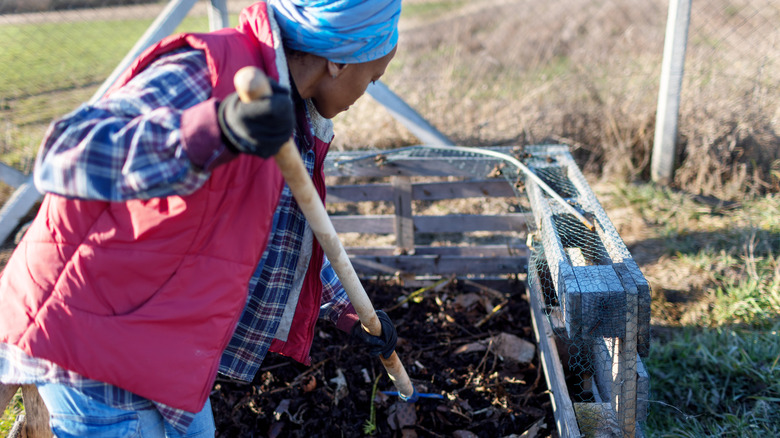 Vgajic/Getty Images
Not Leaves: The Hidden Garden Waste You Should Add To Compost
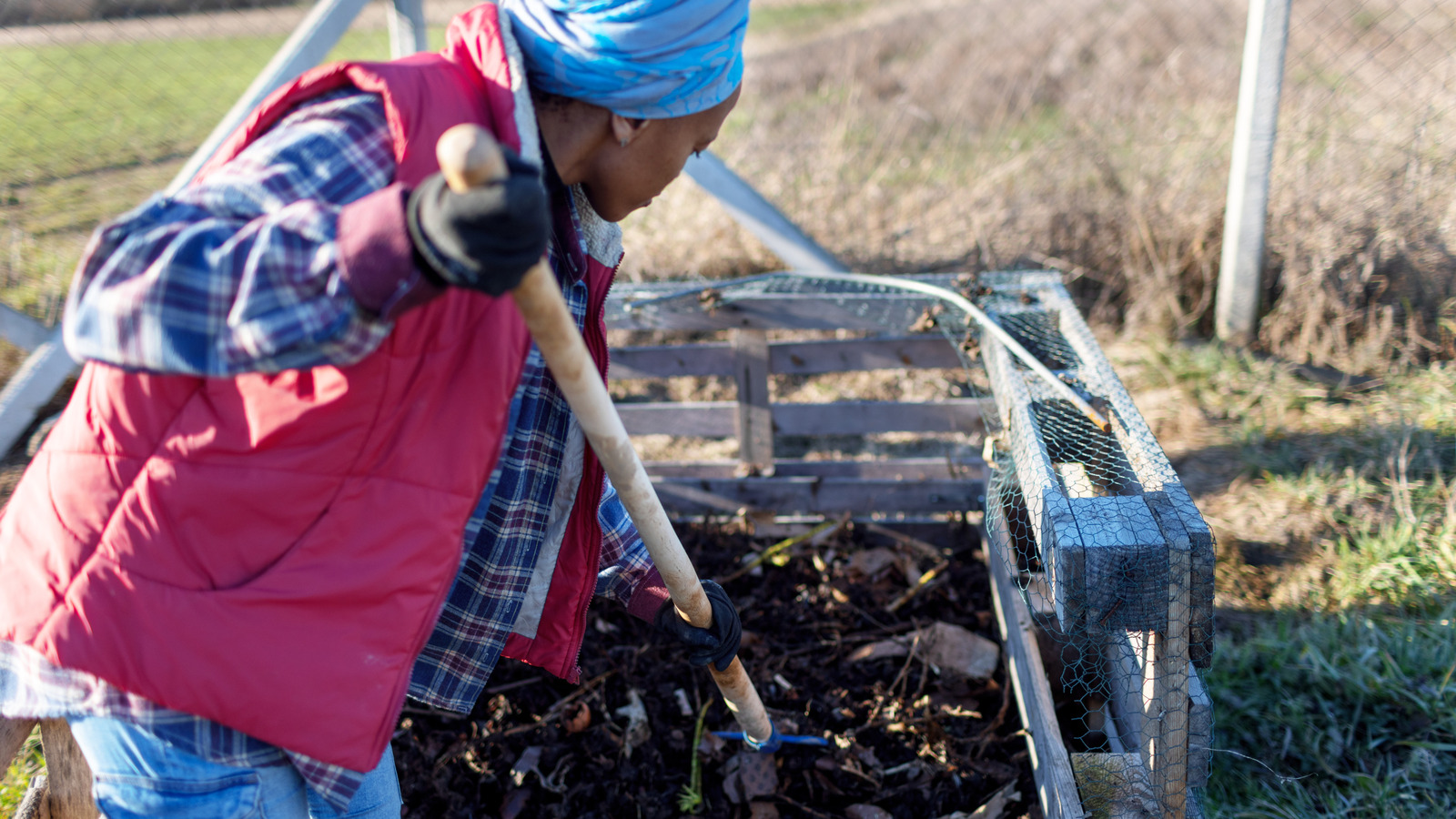
What old potting mix actually does for your compost
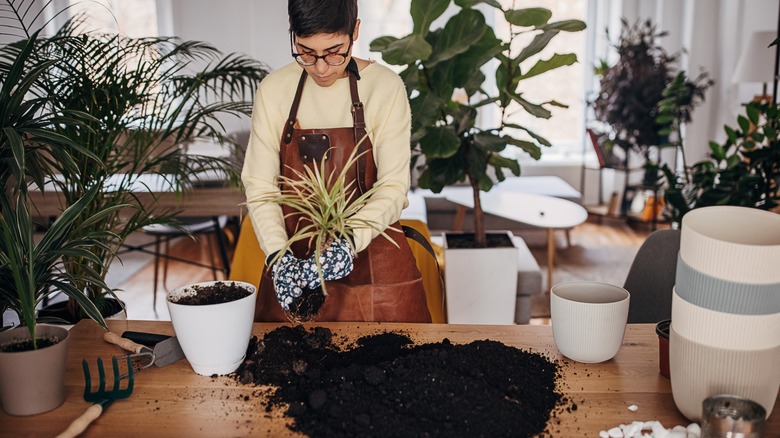 South_agency/Getty Images
 That old, crusty potting mix from your plant can go straight into the compost pile – it’s one of the best additions. The spent medium works as a slow-burning carbon source that keeps your pile balanced, airy, and healthy. Lots of backyard composters end up with a pile that doesn’t break down right or turns into a stinky, slimy mess. Usually, that’s because they don’t have enough browns in the mix. When greens take over a compost pile, they pack down, trap moisture, and cut off airflow. Without proper structure and enough oxygen getting in, you’re left with a soggy, anaerobic pile that barely decomposes.
Old potting mix is loaded with carbon from the coco coir, bark bits, and sphagnum peat moss, so it gives your pile the structure and breathing room it needs. This is exactly what you want for turning your mixture into finished compost quickly and cleanly. Plus, that perlite doesn’t break down at all – it’s heat-expanded volcanic rock designed to keep things open and let water flow freely. Since it never decays, it cruises through the entire composting process without changing. When you spread your finished compost on garden beds or use it in new pots, that perlite is still working, doing the same structural job it did from day one. Over time, perlite builds up to create looser, better-draining soil both in your finished compost and wherever you spread it.
When you shouldn’t add depleted potting mix to your compost bin
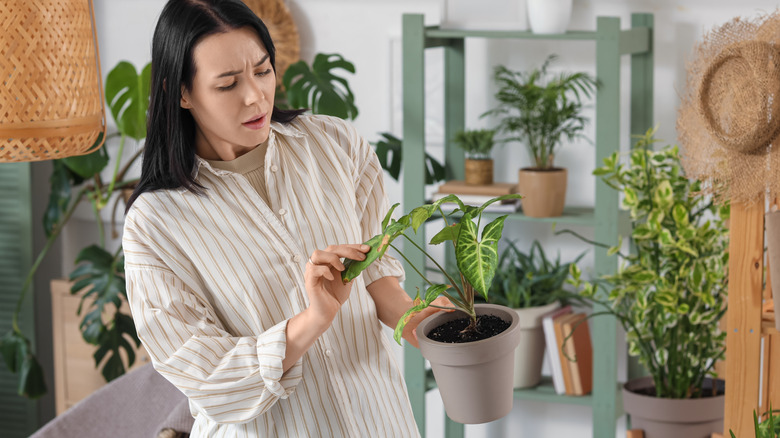 Pixel-Shot/Shutterstock
 Most of the time, tossing potting mix into your compost bin is totally fine, whether it came from houseplants, container gardens, or seed trays from the nursery. But here’s the catch: if those plants showed any signs of fungal infections, bacterial diseases, or viral issues, skip it. Killing off plant pathogens needs seriously high heat, and your average backyard compost bin usually doesn’t get hot enough to reliably zap these bad bugs. That’s the same reason diseased plant material shouldn’t go in compost. If your pile doesn’t reach high temperatures throughout – not just at the scorching center – you could end up spreading nasty plant diseases in your finished compost.
The other situation to avoid is if you’ve been using lots of synthetic fertilizers, pesticides, or herbicides on your containers, especially if you’re planning to grow food. Some garden products have stubborn chemicals hanging around that you don’t want mixing into your growing beds. Some can stunt plant growth while others could potentially end up in your vegetables. But if your old soil is disease-free and chemical-free, it’s totally safe to give it new life through the compost cycle.