
If you’ve got a basement or crawl space, nothing’s scarier than hearing water dripping away during a heavy rainstorm at midnight. While everyone gets excited about kitchen renovations, the truth is there are several home maintenance tasks that matter way more than you’d think — and your sump pump definitely tops that list. If you ignore the fact that your home needs a sump pump, or worse, let the one you have go unchecked, you’re rolling the dice with some seriously high stakes. One storm could turn your finished basement into an expensive, moldy swamp before you know it. If a flooded basement isn’t your idea of a good time during the next storm, here’s the good news: checking your sump pump regularly is super simple. This maintenance task takes just a few minutes each season, yet it can save you thousands in repairs down the road. Regular checks make sure your pump actually does its job when a big storm rolls in or snow starts melting fast. You should give your sump pump a once-over at least twice a year — spring and fall are perfect times. If your pump handles water from a washing machine or your home’s had flooding issues before, bump that up to once or twice a month. Sure, you can ignore your insulation and it’ll be fine, but a sump pump is a mechanical device hanging out in a wet, grimy pit. It’s constantly battling debris, electrical hiccups, and normal wear and tear. Staying ahead of your inspections before the rainy season hits is the only real way to sleep soundly at night. Helivideo/Getty Images
Stop Your Basement From Flooding With This Easy Task

How to inspect your sump pump
 Arina P Habich/Shutterstock
 Good news — inspecting this little basement hero doesn’t require a plumbing license or fancy tools. You just need some time, a flashlight, and a bucket of water. Start by heading outside to make sure the discharge pipe isn’t buried under mulch, blocked by leaves and junk, or plugged up by critters looking for a home. If water can’t escape easily to the outside, your pump won’t be able to push it out, and your sump pit will overflow fast. That defeats the whole purpose. Make sure the water flows away from your foundation too.
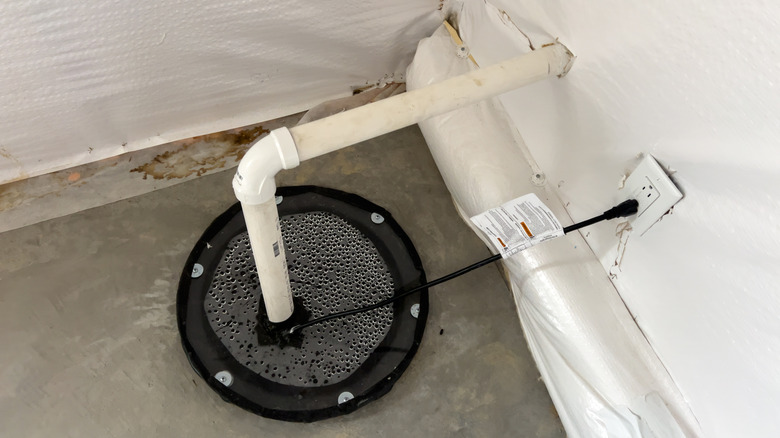
Next up, check the power situation. Your sump pump needs its own dedicated Ground Fault Circuit Interrupter (GFCI) outlet — no sharing with other gadgets. Look at the cord to make sure it’s not damaged and check that the breaker hasn’t flipped. It’s smart to test these outlets regularly since they’re in damp spots and need to be ready to stop dangerous electrical problems. If you’ve got a backup battery system, verify it’s charged up. Now carefully unplug the pump so you can peek inside the pit. Sump pits naturally collect dirt, rocks, and gross buildup over time. Shine your flashlight down there and look for blockages or anything that looks broken.
For the grand finale, plug everything back in and do the real test. Slowly dump a 5-gallon bucket of water into the pit. Watch the float switch rise like it’s floating on a lake and turn the pump on automatically. Listen for any odd sounds like rattling, grinding, or squealing when it kicks on — that stuff means something’s damaged or out of place. The water should drain away quickly. When the pit’s empty, the float should drop down and turn the motor off nice and quiet. If your pump fails this test, you’ll need to call a professional to fix or replace it.