

24, 2026 6:30 am EST
 Hapabapa/Getty Images
 For a long time now, U.S. home prices have been steadily going up, though the housing market did level out a bit in 2025. Most investors have counted on getting a decent, if not amazing, return on their properties for a while. On average, a real estate investment can bring in around 10% per year – that’s a pretty standard goal for property owners.
But did you know investing in farmland can actually be even more profitable? According to the analysis of data from the USDA and National Council of Real Estate Investment Fiduciaries, farmland has yielded owners an average return of around 12.75% per year from 2002 to 2022. That’s thanks to the land’s own appreciation and the revenue it can generate.
A finance professor at the City University of New York, Dennis Shirshikov, agrees, saying “The expected returns for farmland investment are historically around 10% to 12% annually…” But before you sell your house and move to the country, there are some important risks to consider when it comes to farmland.
The extra expenses, and potential income streams, of owning farmland
 Fg Trade Latin/Getty Images
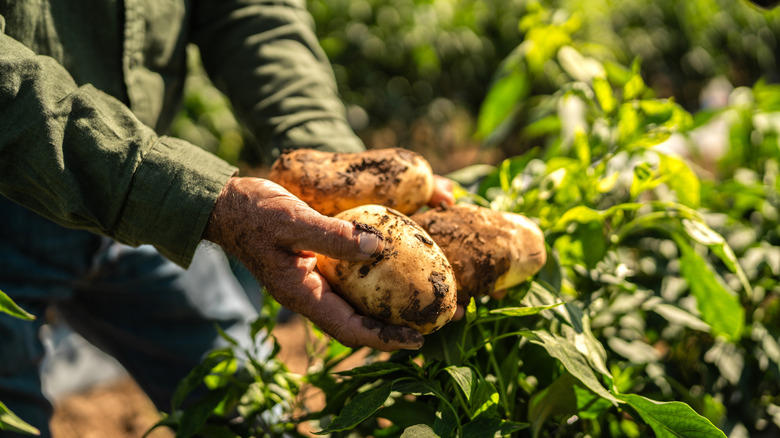
 Owning farmland comes with a lot of the same costs as real estate – things like utilities, down payments, insurance, and taxes. But there are some extra expenses too, like farm equipment and materials. Depending on your crops, you might need to invest in stuff like soil, land treatment, livestock, or tools. And with inflation, even basic farm vehicles like tractors are getting really expensive.
There are also labor costs to consider, especially for larger farms. The USDA found farmworkers charge $17-$20 per hour on average, and agricultural managers charge over $31 per hour.
The good news is farmland can be a reliable hedge against inflation, and it tends to generate more income streams than regular real estate. You can sell what you grow, or even rent out land to other farmers. Plus, agrotourism is becoming a thing – though that may not be for everyone. Real estate investors are pretty limited to just selling homes or renting units.
Farmland revenue can be out of your control
 Vij/Getty Images
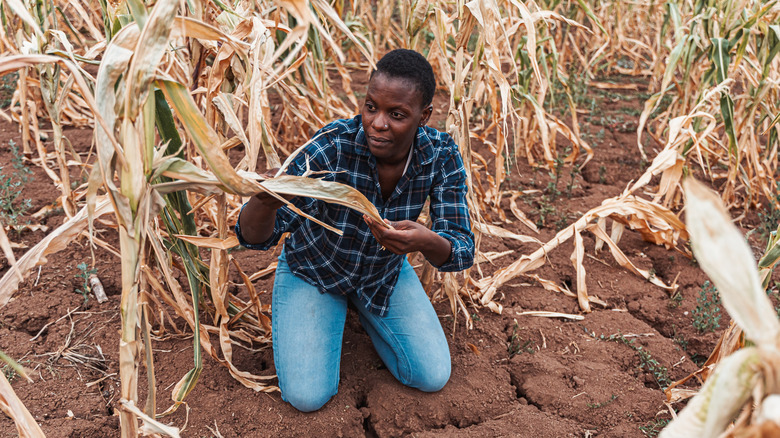
 The sad truth is that extreme weather has been destroying over $20 billion worth of crops in the U.S. each year, according to the USDA. The winter of 2026 has already been the coldest in decades for some regions, and severe weather events are happening more often. Plus, a 2024 study found that for every 1.8°F the planet warms, gross farm income drops by 7%. And with global temperatures not looking to cool down anytime soon, that’s not great news for farmers.
That said, agricultural products have seen huge price spikes recently, and there are a lot of support networks for struggling farmers. The USDA did pass a major aid package in late 2025 too. So while it’s a volatile time, farmers are likely to get way more help than regular landlords would.