
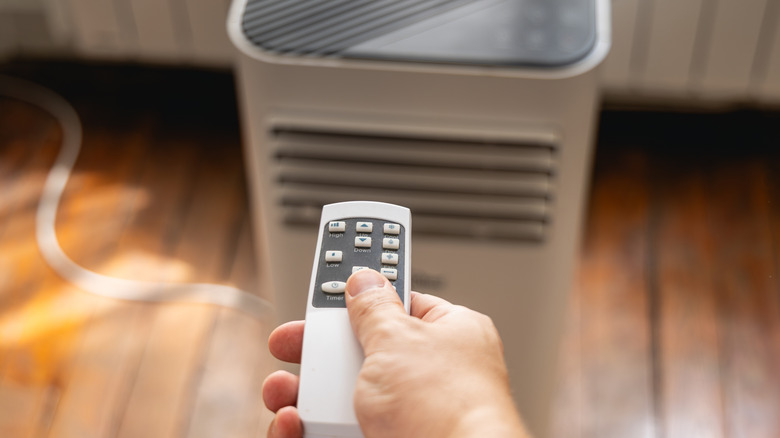
When summer heat rolls around, there’s nothing better than walking into a cool home where you can actually relax without turning into a puddle. If you’re struggling to keep things comfortable, an air cooler or air conditioner might be exactly what you need. But before you buy one, you’ll want to figure out which one works best for your situation. While they might sound similar, these two devices work pretty differently. Air coolers use humidity and moving air to cool things down, while air conditioners actively pull heat and moisture from your home and send it outside. Let’s start with the basics and look at how each one is built. Air coolers—sometimes called evaporative or swamp coolers—are pretty straightforward. Basically, they’re fans with water or ice packs built right in. Some use a honeycomb-shaped filter that a fan pushes air through, and the filter stays wet thanks to water from a reservoir that you fill up every now and then. Air conditioners, or AC units as most people call them, are way more complicated. They work with refrigerant gas, condensers, and compressors to cool down your space while pushing hot air and humidity outside through vents. You’ll find smaller window units that work on their own, but the bigger setups—like central air and wall units—have an outdoor condenser that does the heavy lifting outside your home.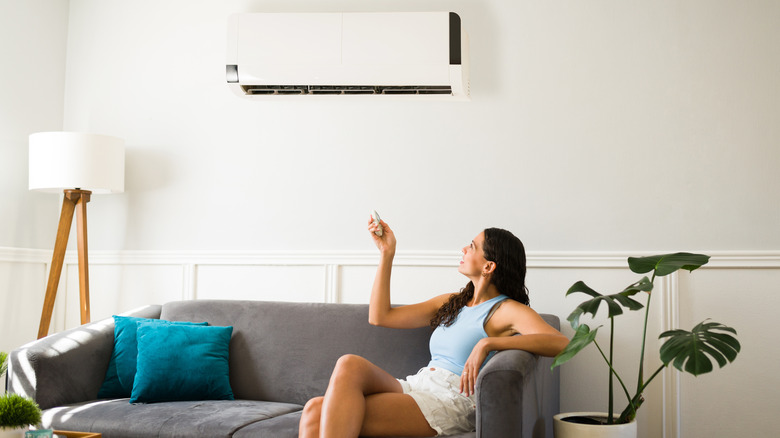 Antonio_diaz/Getty Images
Air coolers and air conditioners do different jobs
 Gautier Normand/Shutterstock
 Now let’s talk about what each one actually does. Air coolers work by using evaporation to bump up humidity levels, which helps bring the temperature down and makes things feel cooler, even if the actual temperature doesn’t drop a ton. The added moisture also has other perks—it cuts down on static electricity, keeps your skin from drying out, and is better for your lungs. Just keep in mind that humidity is best when it’s somewhere between 30 and 50 percent, so air coolers work great in rooms that get good air circulation. Since air coolers are basically just fancy fans, make sure you avoid using them in spaces without good ventilation.
Air conditioners are built to seriously drop indoor temperatures thanks to their powerful components. While air coolers might only lower things by a few degrees, air conditioners can drop and maintain the temperature in a major way. For them to work their best, your room needs to be completely sealed up. Unlike air coolers, AC units usually aren’t something you can just move around. There are some “portable” air conditioners out there, but their portability is still limited by how heavy they are and the fact that they need their hoses to vent outside through a window or door.
Figuring out which one is right for you
 Fizkes/Getty Images
 Which one you should pick really depends on where you live. Since air coolers work by adding humidity, they’re perfect for really dry climates. They won’t drop the temperature dramatically, but they’re solid at taking the edge off hot days. Because they’re not much more complex than regular fans, they don’t use a lot of power, which means you could save some cash. They’re pretty budget-friendly to run—some cost just about $1 per day depending on your unit and local electricity rates.
That said, it’s not the right choice for everyone. If you’re in a hot and humid area, an air conditioner will cool your place down way better. If your space doesn’t have great ventilation—think apartments with few windows or basements—an air conditioner is your better bet. Plus, air coolers can run dry in the middle of the night or when you’re out, while air conditioners can be set to turn on automatically and don’t need topping off during the day.