

Imaginegolf/Getty Images
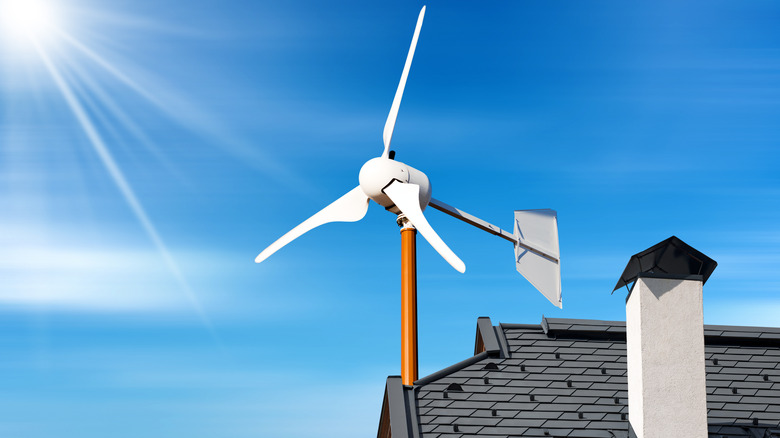
Using wind power isn’t a new idea. Back in the day, you’d find windmills on farms across the Great Plains, pumping groundwater to water crops. Nowadays, we picture huge wind turbines lining prairies and mountainsides. But small wind turbines for home use are gaining popularity too – for off-grid homes, RVs, emergencies, and lowering electric bills. These little turbines can cost a few hundred bucks and charge phones and tablets, or they can be more powerful and reduce your whole home’s energy needs. But a big home wind turbine is a big investment, so for most folks, the best uses are as backup power and for shaving down your electric bill.
The average American home uses around 863 kilowatt-hours per month. To fully power a home that size, you’d need a wind turbine that can generate 5-15 kilowatts – that’s a big, 75-foot tall turbine. Most home turbines are just 1.5 kilowatts. So they’re better for supplementing your energy use than fully powering a home, unless you’re going totally off-grid.
Wind turbines for resilience and lower electricity bills
Alberto Masnovo/Getty Images
With extreme weather on the rise, power outages are becoming more common. But a small wind turbine paired with a home battery can keep your lights on during an outage, even when the wind isn’t blowing. Use a 1.5 kW turbine to store 10 kW of wind energy in a home battery, and you can power your home for 8-10 hours. But wind power can do more than just be emergency backup – it can also lower your electricity bills. When the wind is stronger at night, you can store that energy and use it during the day when electricity costs are higher. Or, if you have net metering, your utility may even credit you for the power your turbine sends to the grid, shrinking your bill.