Natural stone countertops are timeless and add a touch of elegance to your kitchen. They blend seamlessly with almost any style. However, they do have one downside – etching. Etching can happen for various reasons, leaving discolored spots that mar the beautiful appearance of your countertop. But don’t worry, there are ways to fix this problem, both on your own and with professional help. Etching is caused by chemical damage to the surface of your countertop. It commonly occurs when acidic substances like vinegar or chemicals like alcohol or ammonia are used on the surface. These substances react with the natural elements in the stone, wearing away the surface and creating dull or discolored spots that feel different in texture. This is why options like marble are known to be more prone to etching, which is why it’s important to be careful about the cleaners you use. While seeing etch marks can be frustrating, there are ways to repair the damage. DIY approaches can work, but you may also want to consult a professional for advice specific to your countertop material and situation. Royal studio 1/Shutterstock
Scuffs on the Countertop: Why It Happens and How to Fix It

DIY ways to remove countertop etching (& when to consult a professional)
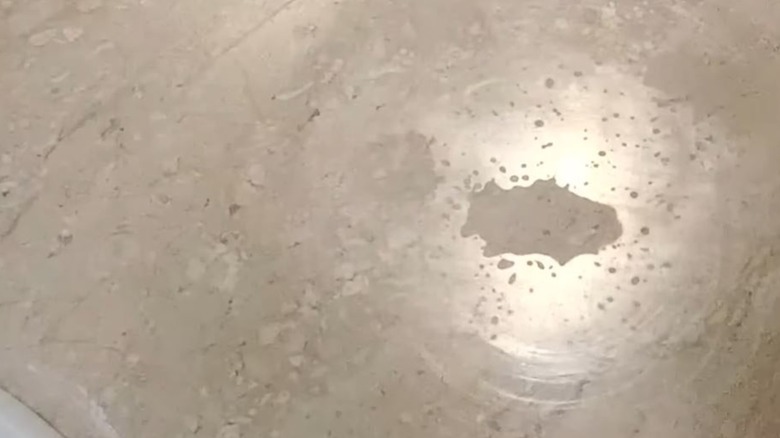
There’s no one-size-fits-all solution for etching. Some folks see it as just part of owning natural stone countertops – a bit of character, if you will. But if you do want to repair the etching, the approach will depend on the material and the severity of the damage.
For mild etching on softer materials like marble, you can try cleaning the surface thoroughly with a stone-safe detergent and water, then buffing the marks away with a polishing powder. Use a soft cloth made for this purpose, as abrasive materials can make things worse. You may need to do this a few times to get the results you want. For harder stones like granite, you may need to remove the finish, fill in the etched areas with epoxy, and then refinish the whole countertop. This takes more time, but can really bring that sucker back to life.
These DIY methods can work well, but for severe etching and discoloration, you may be better off having a professional handle it. Heavy sanding is sometimes required to fix the problem, and you don’t want to risk grinding too much of the surface away and ending up with a wonky countertop. Pros have the expertise to get it done right.