Fcafotodigital/Getty Images
Microwaves are super handy for heating up food fast, but it’s important to be careful about the containers you use. There are certain materials, like Styrofoam and metal, that you should never microwave. Using the wrong container can make a mess, damage your microwave, or even be a fire hazard. It’s always better to play it safe and transfer your food to a microwave-safe dish before popping it in the microwave.
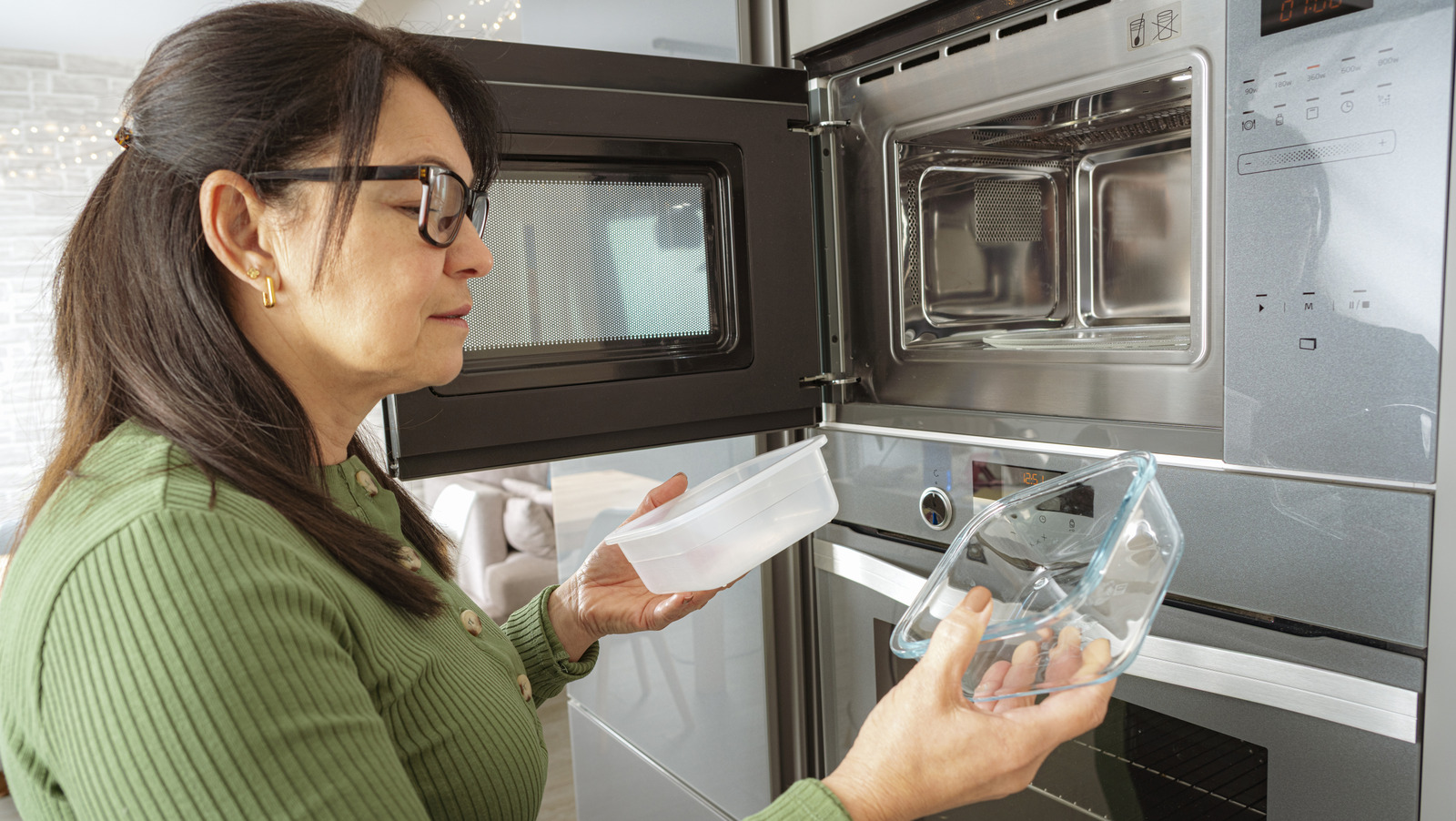
Most reusable containers made of glass or ceramic are totally microwave-safe. Just check the bottom for a microwave-safe label. Plastic containers can also be microwaved, but you’ll want to avoid ones that could leach chemicals into your food when heated. When in doubt, it’s best to keep plastics out of the microwave.
Microwaving plastics and Styrofoam can present a health risk
Yarrrrrbright/Shutterstock
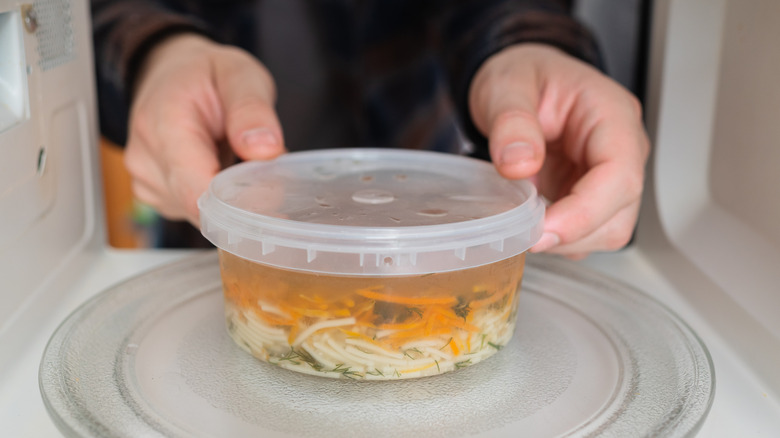
Heating up plastic containers in the microwave can cause them to release nasty things like microplastics, BPA, and phthalates into your food. That’s not something you want to be eating! The risk is even higher for foods with a lot of fat, like last night’s cheesy leftovers. Styrofoam is another big no-no – it can leach chemicals and mess up your microwave.
Some plastic containers are labeled as microwave-safe, like the ones made for meal prepping. But even those can still release microplastics when heated. It’s just better to play it safe and avoid microwaving plastic whenever you can.
Metal and paper-based materials may damage your microwave
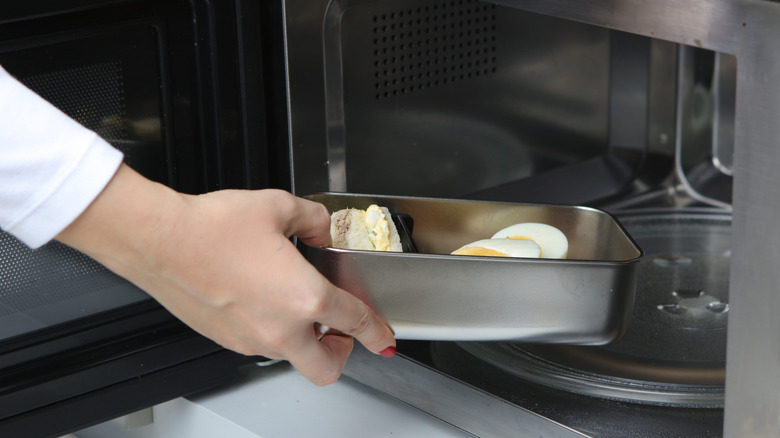
Imageologist/Shutterstock
Metal containers and parts like lids, handles, or utensils are a big no-no in the microwave. Instead of heating up, the metal will actually bounce the microwaves around, which can damage your appliance or even cause sparks and fires. That’s seriously not something you want happening in your kitchen!
Paper products like cardboard, parchment paper, and paper towels can also be risky. When they get hot and dry, they’re basically tinder waiting to catch fire. It’s best to only use them for quick reheats on low power, or transfer the food to a safer microwave-safe container.