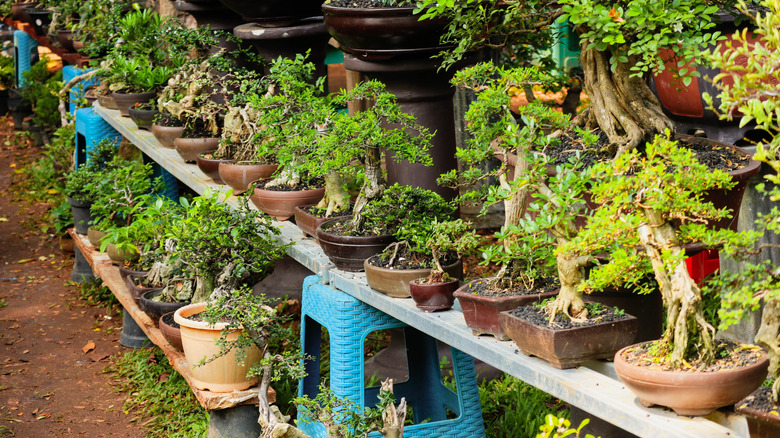
Helga Arina/Shutterstock
The bonsai hobby is like blending art and gardening. It’s more than just a casual pastime – it’s a whole lifestyle. Getting started may seem tricky and time-consuming, but there’s a simple trick that makes it easier. Just head to your local nursery and look for large, overgrown trees or shrubs. These woody plants already have the key features you need, like a tapered trunk and intricate branching. This trick works for both indoor and outdoor bonsai. With some pruning, wiring, and consistent care, you can transform those forgotten nursery finds into stunning bonsai masterpieces.
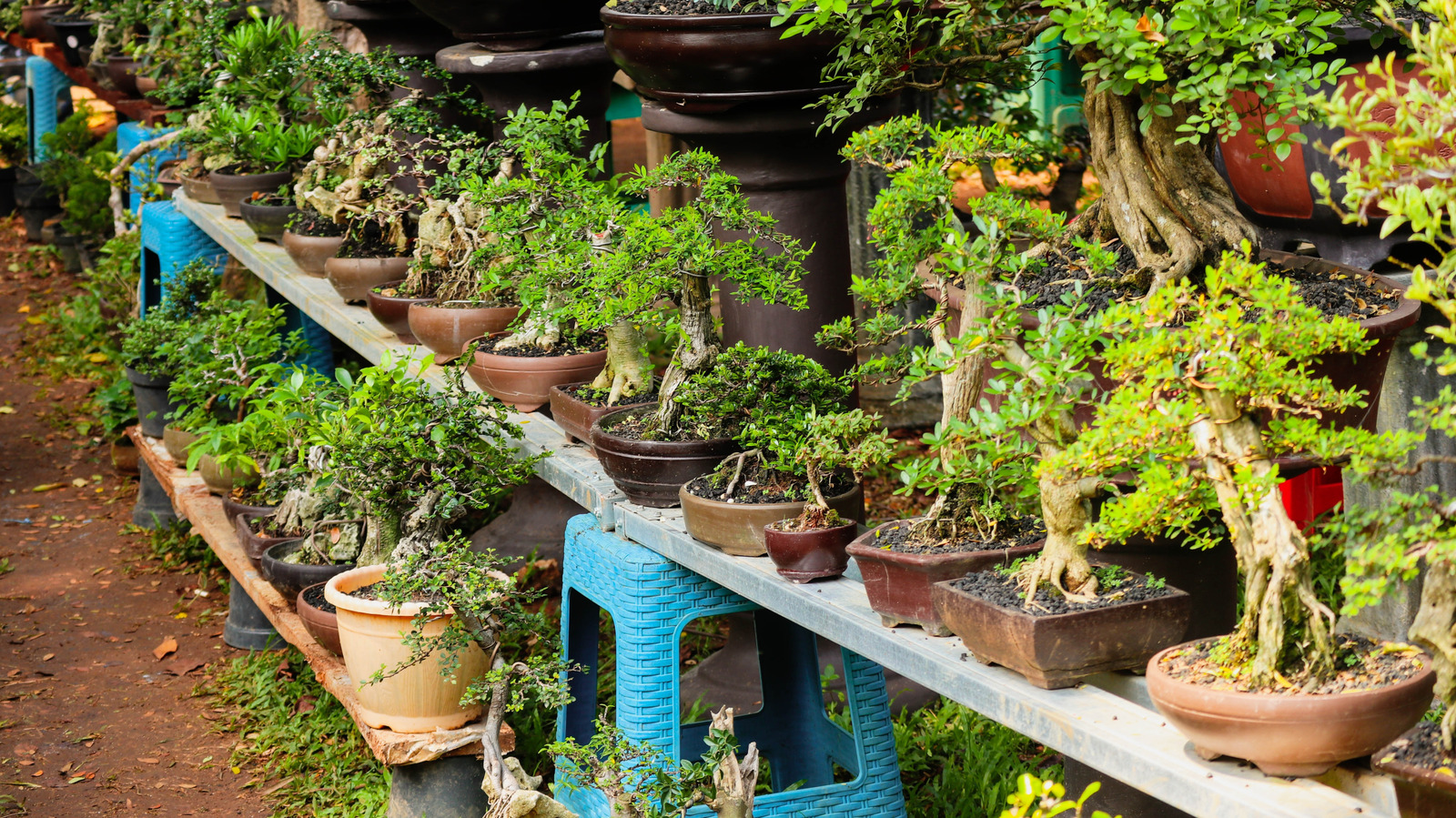
Bonsai has roots in China and Japan – the Chinese term “pun tsai” literally means “tray planting” in English. Each little ceramic container holds a miniature garden or natural landscape. Having a big, thick tree in a small pot creates the illusion of a mature specimen. To get started, visit your local nursery and scour the forgotten corners and discount sections. Look for healthy, overgrown, curvy, or oddly-shaped deciduous and evergreen shrubs or trees already growing in pots. Twisted branches and visible, thick roots above the soil line are a bonus. Even if the plants are root-bound, that’s okay – you’ll be pruning the roots anyway. Just steer clear of any diseased or pest-ridden trees, and choose vigorous growers over struggling ones.
Select a potential bonsai tree with budding harmonic proportions
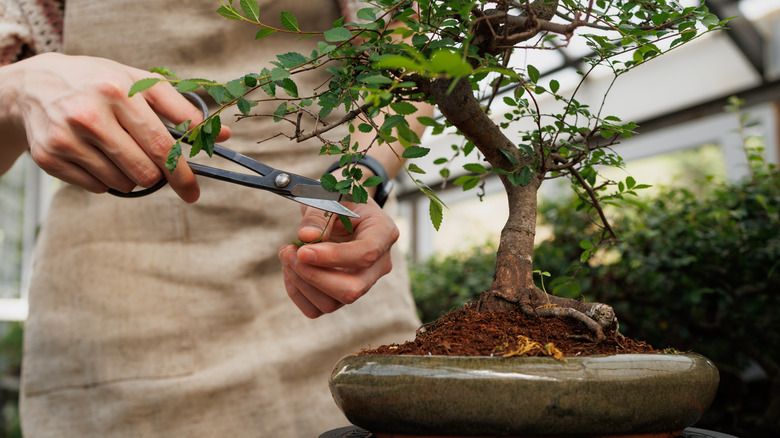
Dmytrohai/Getty Images
A few simple rules of thumb can help guide your bonsai tree selection. First, look at the plant’s overall height. Ideally, the total height should be about six times the width of the trunk for proper balance. For example, if the trunk is 2 inches wide, the whole plant should be around 12 inches tall. Keep this ratio in mind as you browse the nursery to visualize your future bonsai.
Another helpful rule is that the trunk should taper towards the top. It doesn’t have to be perfectly even, but it should get narrower from bottom to top. The branches should follow the same pattern, starting thicker near the trunk and getting thinner further out. If the branches aren’t positioned how you want them, don’t worry – you can use bonsai wire to gently twist them into shape. Just be careful not to bend them too much and risk snapping.
Harmonious proportions also apply to the bonsai containers. These trees are typically planted in wide, shallow pots to maintain the illusion of a mature specimen. The nursery pot your plant comes in is likely deeper than it is wide. When repotting, free the roots from the soil and carefully trim them shorter with pruners. This will keep the tree small and comfortable in a tiny bonsai pot for at least a season. You can scale up to a larger container later if you see roots poking out of the drainage holes.