
Dima Berlin/Getty Images
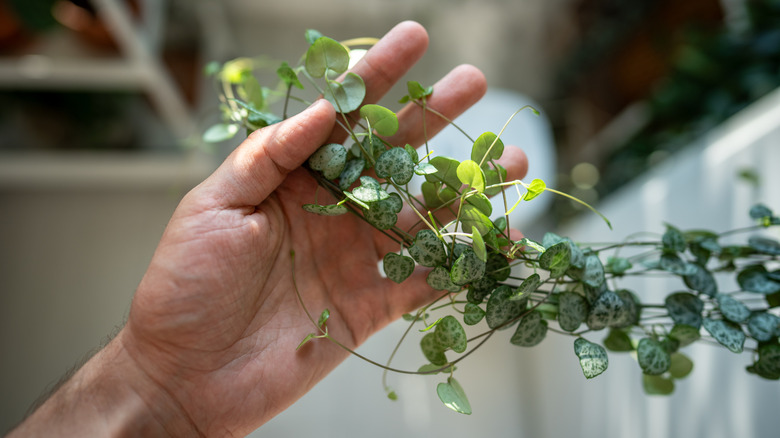
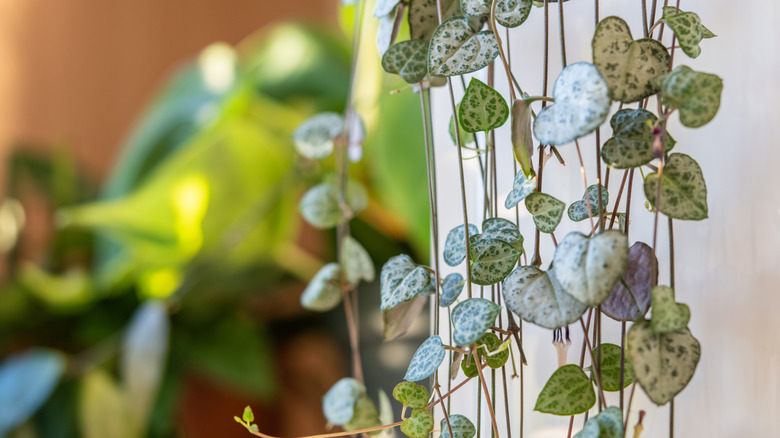
Did you know that the string of hearts (Ceropegia woodii) plant can look incredible? Whether you grow this vining stunner in a hanging pot or place a standard container on a pedestal, those vines give the impression that you’re in a jungle surrounded by lush greenery. Not to mention that it’s one of the easiest houseplants to care for. The heart-shaped leaves and the long trailing stems can grow to incredible lengths, but sometimes those vines can become a little bare and forlorn near the pot, with more of their volume occurring towards the tips. To make it look fuller with more cascading vines coming down to fill some of that sparseness, you just need to strategically prune some of the vines and encourage new growth.
When you prune this plant, it’s best to do it in spring or summer while it’s actively growing, so you’ll start to see new growth quickly. All you really need is a sharp pair of pruning shears or garden snips – even a good pair of kitchen scissors will work. Just make sure your pruning tools are clean and sterilized to reduce the risk of spreading bacteria or fungal spores.