

24, 2026 6:30 pm EST

Kevin Carter/Getty Images
While the idea of getting a mortgage might feel like a bummer in 2026, some would-be homebuyers are tired of waiting. Since the Federal Reserve hiked rates in 2022 to fight inflation, the housing market has slowed down. This is because folks can’t or don’t want to pay the higher monthly costs from those mortgage interest rates over 6%. But things could be changing. While home prices and rates aren’t directly linked, they’re deeply connected. So even though high rates are still a challenge, they have impacted the fact that the housing market has stalled.
This likely means a lot of buyers and sellers are ready to jump back into the housing market after holding off for a few years. With that in mind, it could be smart to brush up on some key mortgage know-how. While you should think about things like just your budget, there are other factors you might not be as aware of. One big one is the loan-to-value (LTV) ratio. This number can determine if your loan gets approved and even affect the interest rate. So it’s worth quickly calculating the LTV on a potential home before applying for a mortgage.
Understanding the loan-to-value ratio
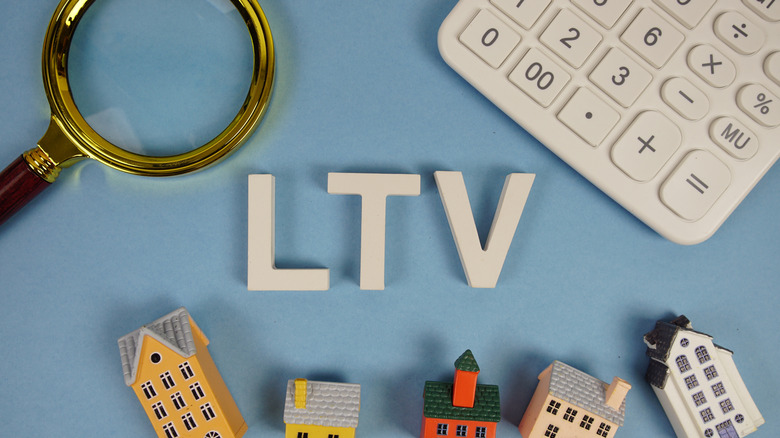
mayu85/Shutterstock
While future homebuyers often get caught up in things like closing costs and realtor fees, without factoring in the LTV ratio, none of those other considerations will likely matter much. LTV ratio issues are a pretty common mistake among would-be homebuyers. At its core, an LTV ratio compares your planned mortgage amount to a home’s appraised value. If the ratio is too high, that indicates a riskier loan – so a lender could be less likely to approve your application or might offer a higher, less competitive interest rate. Generally, lenders want an LTV at or under 80%, so if you’re looking at a pricey home, you’ll want to crunch your own numbers before applying.
To calculate an LTV ratio, take your planned loan amount and divide it by the home’s appraised market value. Then multiply that number by 100 to get a percentage. For example, if you want to borrow $200,000 for a $250,000 home, that’s 0.8 x 100 = 80%. That’s right on the edge of what most lenders would be comfortable with, but it could still get you a competitive rate depending on the rest of your finances.