
Bezbod/Shutterstock
The first rule of thrifting is to never overlook vintage pieces, because they’re likely to become popular again really soon. While many thrifters go for mid-century credenzas or funky tables, there’s a more sophisticated wooden antique that’s probably hiding in those piles – a wood tilt-top table. It’s elegant and stylish, but also super practical. Tilt-tables are the hot new thrift find these days, as they’re making a big comeback.
These pieces were once the height of functional design in the 18th and 19th centuries. The table top could tilt down, so the whole unit could be tucked away when not in use. They were really popular during the heyday of tea-drinking in England and colonial America – a clever invention that was both decorative and super useful.
Unfurled, a tilt-top table looks elegant and classy. But you can also hide it away to avoid clutter, which is a big plus in today’s world of stuff. And on top of that, vintage tilt-top tables are actually gaining value as collectibles. One thrifter, Jennifer Price, says she used to just see them as a handy side table, but now she’s seen them going for over $1,000 in antique shops. Price has even inherited a tilt-top table from her grandma, and it’s become one of her favorite pieces of furniture.
How to spot a tilt-top table
Lisa-blue/Getty Images
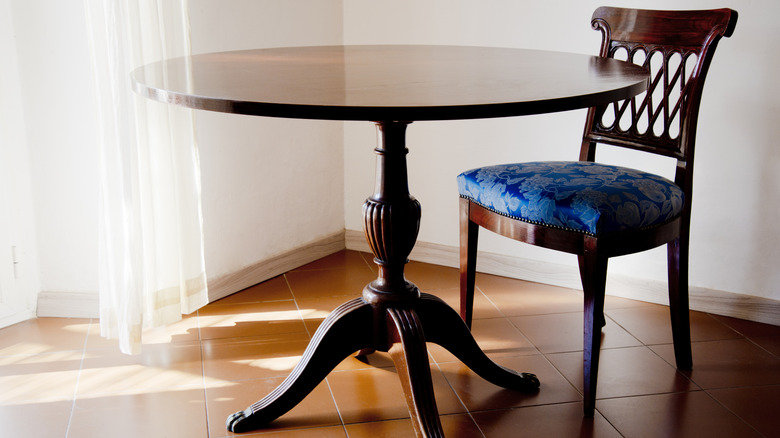
Finding a genuine antique tilt-top table from Europe or America can take a trained eye, since there are tons of modern reproductions from Southeast Asia floating around. The key thing to look for is a wooden block attached to the underside of the tabletop, which connects to the pedestal via a hinge or pivot. These joints should feel really sturdy, since they were meant to hold stuff. Repros will have much weaker joints since they’re just for looks.
Authentic tilt-tops usually have a single pedestal pillar with three legs attached. And they might have casters on the feet, to make them easier to move around. The size can vary too, since they were made for different purposes over the centuries. Another sign of the real deal is a metal (often brass) plate to support the legs.
By the Victorian era, these tables got really fancy, with elaborate carvings and inlays. But the basic tilt-top design stayed the same – a practical yet stylish piece. They were often made from different types of mahogany, and helped drive a whole craze for wood patterning and veneers. And if it shows genuine signs of wear and use over the years, you’ve probably found a true antique tilt-top.