

Glass can be such a pain to keep clean, huh? Those annoying smudges, streaks, and soapy marks just seem to show up no matter what you do. But no need to worry, we’ve got your back. There are plenty of easy ways to get your glass shower doors looking spotless again, even if you’ve tried everything under the sun. For starters, adopting a regular cleaning routine and swapping out that old tea towel for a microfiber cloth can make a big difference. Plus, giving your doors a final rinse with some distilled water can help prevent those frustrating mineral deposits. And if the sun’s shining through, try adjusting when you clean to avoid streaks from quick evaporation. This guide covers 13 clever techniques for restoring that sleek, streak-free shine to your glass shower doors – from DIY cleaners to professional-approved tricks. So put down that expensive glass cleaner and get ready to make your shower doors sparkle like new. Scott Prokop/Shutterstock
Use a vinegar, cornstarch, and water solution
 Nicoleta Ionescu/Shutterstock
 Hear me out – cornstarch can actually be a game-changer for cleaning glass! When you mix it with vinegar and warm water, the fine, powdery texture acts as a gentle abrasive to scrub away grime, soap scum, and mineral deposits. The vinegar helps dissolve all that buildup too. Just spray it on, let it sit for a bit, then buff it off with a soft cloth for a spotless, streak-free finish.
The key is getting the right ratio – 1 tablespoon of cornstarch, 1/4 cup of white vinegar, and 1 quart of warm water. This combo packs a powerful punch against those pesky streaks, without being too harsh on the glass.
Dry with two microfiber cloths to ensure a clean finish
 Vasylchenko/Shutterstock
 Using the wrong cloth to dry your shower doors is a common mistake that can leave you with stubborn streaks. Microfiber cloths are the way to go – they’re super absorbent and lint-free, so you won’t end up with any pesky residue.
First, use a damp microfiber cloth to gently lift any remaining grime off the glass. Then, switch to a dry cloth to soak up the leftover moisture and give everything a nice, clean buff. Your doors will be streak-free and looking brand new, especially if you wash the cloths separately on a cool cycle with mild detergent.
Use a squeegee to immediately remove rinse water
 Pixel-Shot/Shutterstock
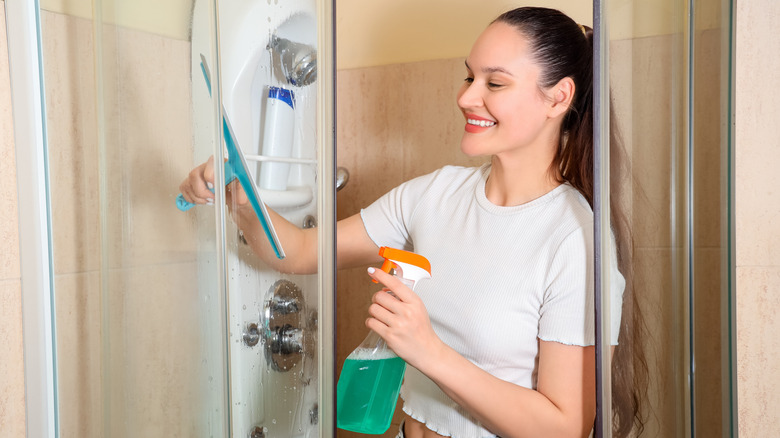
 The key to avoiding streaks is getting that water off the doors as fast as possible. If you let it sit and dry, you’ll end up with all sorts of unsightly marks. That’s where a squeegee comes in super handy. Just run it from top to bottom to quickly remove any leftover rinse water before it has a chance to dry.
Professionals swear by this trick – it’s way more eco-friendly than going through stacks of paper towels. Plus, you won’t have to worry about any lint or residue being left behind. Just follow up with a couple microfiber cloths to wipe away any last water spots, and your shower doors will be sparkling clean.
Soak the glass with lemon juice, vinegar, and warm water before cleaning
 sebra/Shutterstock
 For a natural way to tackle tough grime and mineral buildup, you can’t beat lemon juice, vinegar, and warm water. The acids in the lemon and vinegar help dissolve all that nasty stuff, making it way easier to scrub off. Just let the solution soak for up to an hour before cleaning, and you should be good to go with just a squeegee and some soft cloths.
The warm water helps speed up the chemical reaction, so the acids can really get to work on breaking down that stubborn residue. Give it a try next time your shower doors are looking worse for wear – you might be amazed at how effortless the cleaning process can be.
Use distilled water when cleaning to eliminate mineral deposits
 Serebryannikov/Getty Images
 Tap water can leave behind mineral deposits that cause those annoying streaks, so using distilled water for the final rinse is a game-changer. It eliminates the risk of rewetting your doors with hard minerals.
Now, you don’t necessarily have to use distilled water for the whole cleaning process – tap water is fine for the initial scrub. But once you’re ready to give everything a final rinse, switching to distilled will help prevent any new streaks from forming. If you live in an area with relatively soft water, you may even find that rinsing with tap and using a squeegee is enough to keep things streak-free. But in harder water regions, that distilled rinse can make all the difference.
Dish soap, vinegar, and water is a surprisingly powerful combination against streaky glass
 Robin Gentry /Getty Images
 You probably already know that vinegar is a shower door superhero, thanks to its acidity that can dissolve grime and mineral deposits. But did you know that adding a little dish soap can make it even more effective?
Dish soap is designed to cut through grease, so when you combine it with the power of vinegar and warm water, there’s not much that can stand up to it. Just mix 2 cups of warm water, 1/4 cup of white vinegar, and 1/2 teaspoon of dish soap, spray it on, let it soak, then scrub away those stubborn streaks with a soft, damp cloth. The warm water helps everything work its magic, and you’ll be left with a sparkling clean, streak-free shower door.
Wipe your shower door weekly to keep on top of streaks
 Nicoleta Ionescu/Shutterstock
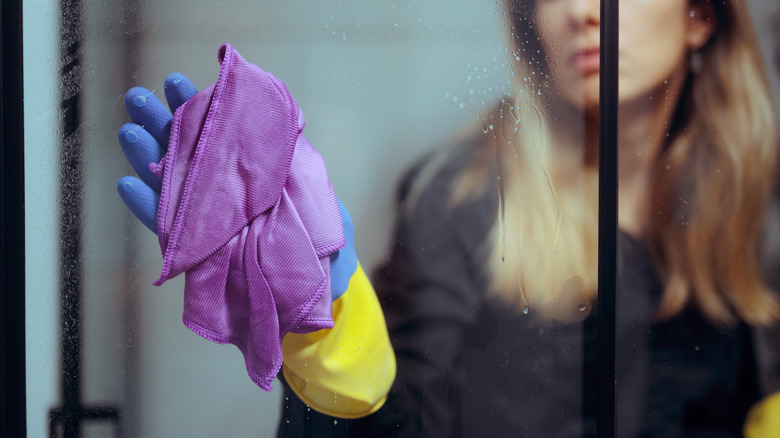
 Keeping your shower doors looking their best takes some regular maintenance, but it’s worth it to avoid those frustrating streaks. Making a habit of wiping them down weekly can go a long way.
You don’t even need to break out the heavy-duty cleaning supplies every time. Just a quick wipe with a damp microfiber cloth, a thorough squeegee, and a final buff with a dry cloth will do the trick to keep minerals, soap scum, and grime from building up. Staying on top of it week-to-week means your doors will need way less intensive cleaning down the road.
Avoid evaporation streaks by cleaning away from direct sunlight
 Andrii Borodai/Getty Images
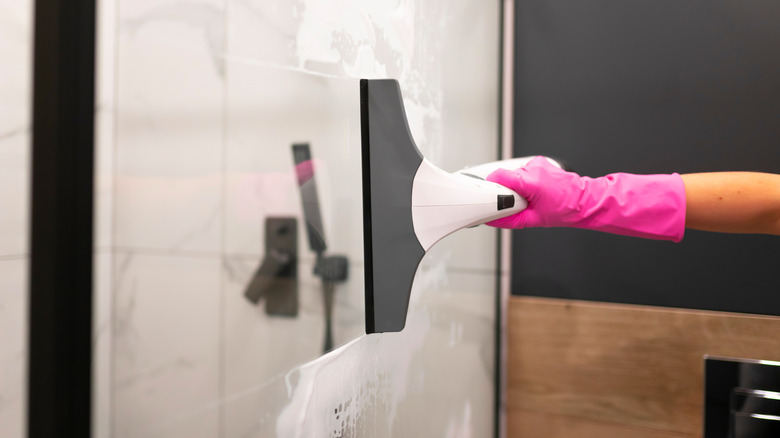
 If your bathroom gets a lot of direct sun, you’ll want to time your cleaning carefully. The heat from the sun can cause any water or cleaning solutions you use to evaporate way too quickly, leaving behind those pesky streaks and lines.
Related Posts

Easy Way to Keep Ceiling Fans Dust-Free
Thai Liang Lim/Getty Images Ceiling fans can really collect a ton of dust over time.…

Easy Cabinet Tweak Hides Shoes Smartly
Paulina_OK/Shutterstock Everyone collects something, whether it’s trinkets, cards, rocks, antiques, or something all your own.…

Lego Hacks to Tidy Up Charging Cords
art of line/Shutterstock We may receive a commission on purchases made from links. When LEGO…