
If you live somewhere chilly or way up in the mountains, you know the struggle is real when it comes to growing stuff in your yard. Honestly, a lot of us have basically said goodbye to tropical fruits and stuck with the hardier berries. But here’s some good news: thanks to some clever plant breeding, there’s actually a tropical fruit tree that can handle winters even in zone 5 if you take care of it. Enter the fig tree. These guys are surprisingly tough, even though they originally come from warm places. The ‘Chicago Hardy’ fig tree (Ficus carica ‘Chicago Hardy’) is your ticket to growing figs even when the temperature drops way below what you’d normally expect. Plus, these beauties don’t need a partner tree to make fruit — they can do it all on their own. One look at those gorgeous deep-green lobed leaves and you’ll feel like you’re staring at a Hawaiian sunset framed by tropical branches. And guess what? Thanks to its super-improved cold tolerance, you can get that whole Hawaiian vibe going even if you’re chilling by the shores of northern Lake Erie. This tree stays on the smaller side, growing to about 10 to 15 feet tall and 10 to 12 feet wide. The big, show-stopping leaves are really the star of the show here, since the fig flowers are actually hidden inside the fruit. Before you rush out to grab one or two of these hardy trees, it’s worth knowing that edible fig trees are actually on the invasive species list in parts of California. The good news is that ‘Chicago Hardy’ has some options available, which can help keep those pesky suckers from spreading and taking over your whole yard. Kieferpix/Getty Images
Getting your ‘Chicago Hardy’ fig tree in the ground and growing strong
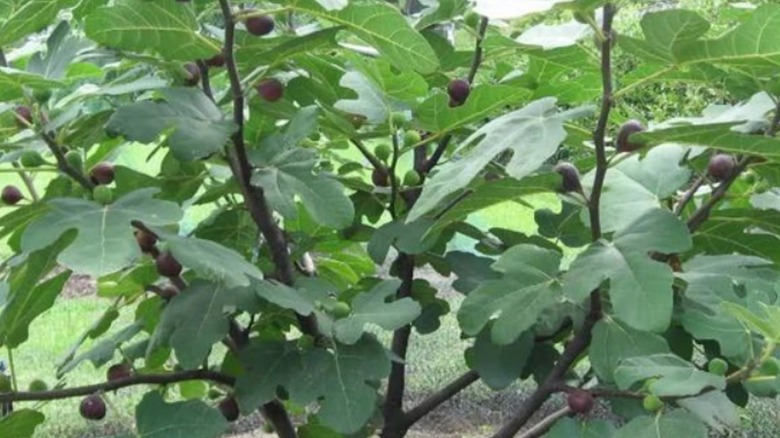
Edible figs aren’t nearly as picky as their other ficus cousins, but there are definitely some things you’ll want to nail down when growing one. ‘Chicago Hardy’ figs do great in zones 6 to 10 no problem, and they can even handle colder spots with the right moves — the fact that they grow awesome in containers is a real game-changer here. Pop your ‘Chicago Hardy’ fig where it gets full sun and sits in soil that drains well. When you’re digging the planting hole, make it twice as wide as the root ball and just deep enough so the top of the roots pokes up a tiny bit above the surrounding dirt. Throw down a nice layer of mulch around the tree, but keep a few inches between it and the trunk. You can also go the container route and stick the pot against a wall that faces south for extra warmth. Then just move it into a garage or storage space before the cold hits.
Water the tree like crazy during its first growing season to help those roots really take off. Twice a week with a good deep soak should work great for most places. Once the roots are all established and happy, dial back the watering — but still keep it thorough when you do water. Your tree really only needs fertilizer if your soil is pretty rough or if the tree’s looking a little off. If either of those things is happening, feed it in springtime with some compost or a basic balanced fertilizer.
Don’t sleep on winter protection for your fig tree. After you do a light trim, keep your outdoor tree safe by wrapping it from the trunk all the way up to the branch tips with burlap (or fiberglass insulation if you’re in a really cold zone), and pop an upside-down bucket right over the top of the wrapped crown.