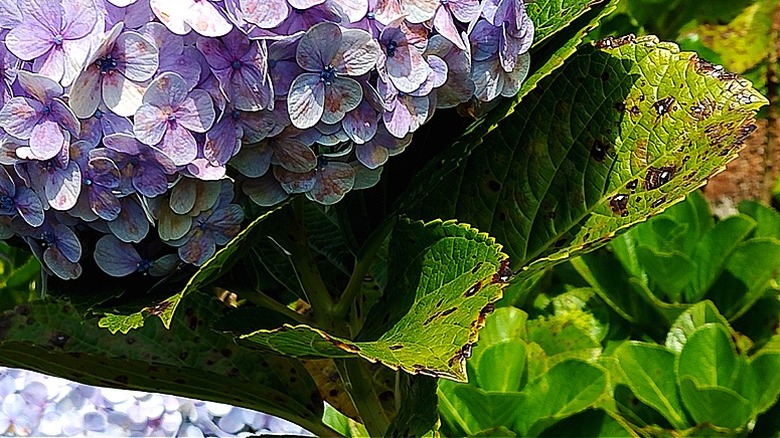
Hydrangeas (Hydrangea sp.) are known for their stunning, gorgeous foliage that’s just as eye-catching as their beautiful blooms. But here’s the thing—when strange spots start popping up on the leaves, it can be pretty concerning. If you’re growing hydrangeas, you’ll want to know about two common leaf diseases: Cercospora leaf spot and bacterial leaf spots caused by Xanthomonas campestris. The good news? You can tackle the problem once you figure out which type of spots you’re dealing with. Cercospora leaf spot is a fungal issue, and the telltale signs are pale spots surrounded by a darker, reddish-brown ring—it’s like a target! You might also notice that heavily infected leaves start to turn yellow. This fungal nasty can show up on several different hydrangea varieties. Now, here’s where it gets tricky: bacterial leaf spots from Xanthomonas campestris can look pretty similar to Cercospora spots at first glance. Both tend to affect the “big three”—oakleaf, bigleaf, and smooth hydrangeas—and both start on the lower, older leaves before creeping upward. The key difference? These bacterial spots don’t have that lighter center ring, so there’s no halo effect. Instead, they show up in brownish or reddish-purple colors with ragged, uneven edges. Viktor Gladkov/Shutterstock
Cercospora leaf spot on hydrangeas
 Shoftwavy Lines/Shutterstock
 Since Cercospora leaf spot shows up on the lower leaves first, you’ve got a chance to jump on it before it spreads. Just remember that if you catch it super early, the halos might not be there yet. What you’ll see is brown or dark purple circles that gradually turn into dark brown, uneven halos with lighter tan or gray centers.
Here’s something important: extra moisture sitting on the leaves makes this fungal problem way worse. If you’ve got a sprinkler system, consider repositioning it so water doesn’t spray your hydrangeas from above. Instead, try watering them right at the soil line using a soaker hose or drip-irrigation system.
Also, clean up fallen leaves around your plants so spores don’t hang around over winter and cause problems next year. Once you spot the spots, think about using a fungicide with myclobutanil or chlorothalonil to stop the disease in its tracks before it takes over your hydrangeas’ growing season.
Bacterial leaf spot on hydrangeas
 Tunatura/Shutterstock
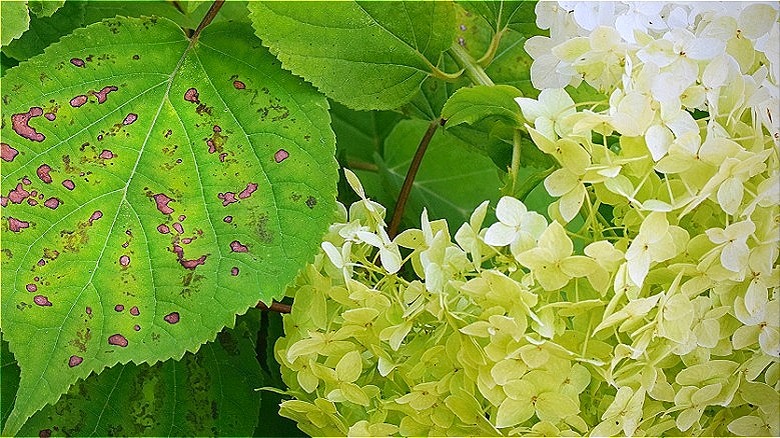
 Both leaf spot diseases kick off at the bottom leaves of your hydrangeas, but the main difference between Cercospora leaf spot and spots from the bacteria Xanthomonas campestris is that bacterial spots don’t have that two-tone halo ring. Plus, bacterial leaf disease spots look more angular and sharp, with more of them showing up on each leaf. Often, these spots end up blending together into bigger “blotches.” And here’s the bummer—bacterial leaf spot can actually kill individual leaves.
Good news though: you’ll treat this disease pretty similarly to the fungal type. You’ll want to rake up fallen leaves under your shrub and switch to watering at ground level instead of from above. Pruning out spotted leaves can help, but only do it when things are dry outside, and make sure you’re disinfecting your pruners frequently as you go.
If Xanthomonas campestris keeps coming back to bug you, a copper-based fungicide might do the trick, especially if you apply it in spring. When you’re planting fresh hydrangeas, just remember that good spacing ensures plenty of air flow, which helps fight off both bacterial and fungal diseases.