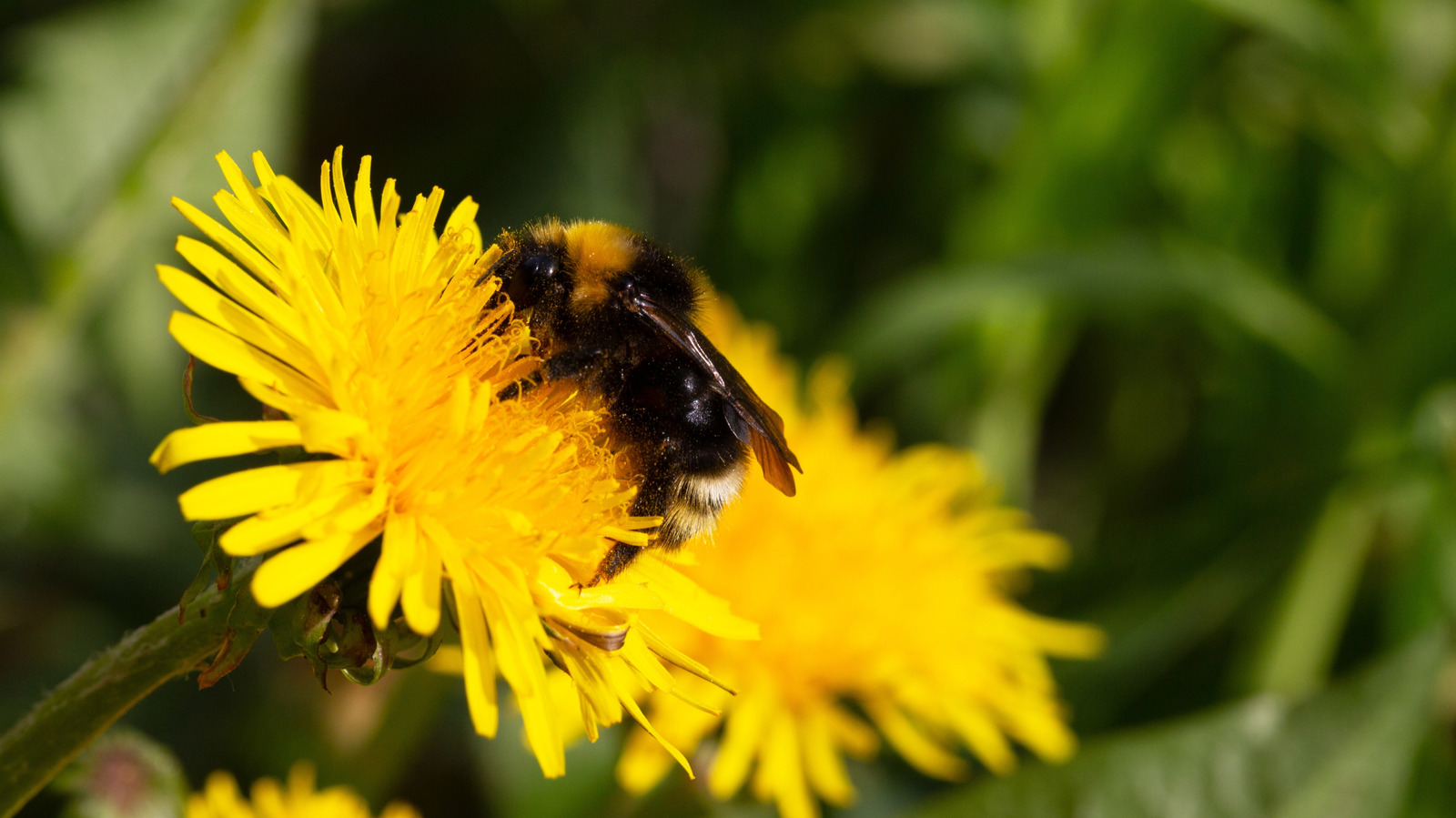
Hold up, don’t pull out those dandelions just yet. Even though they may not look as tidy as your perfect lawn, those sunny yellow flowers can actually be a big help for all kinds of critters in your backyard. Turns out, lots of insects and birds love to chow down on dandelions. Dandelions are one of the first flowers to bloom in spring, so they’re a reliable food source for bumblebees, butterflies, and other early bloomers looking for nectar. Plus, finches and other birds will munch on the dandelion seeds. Leaving the dandelions be can give these helpful little guys a boost. If you want to attract more wildlife to your yard, try letting the dandelions grow instead of mowing them down. You can even give them a helping hand by providing rich soil for them to thrive. Easy peasy! AnnaNel/Shutterstock
House finches
 Jeffgoulden/Getty Images
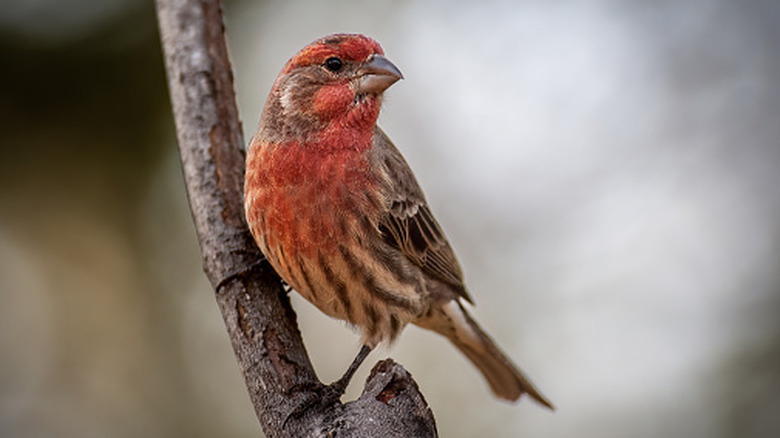
 One of the first feathered visitors you might see at your dandelion patch is the house finch. These little guys love munching on dandelion seeds. They’ll use their beaks to pluck out the fluffy seed heads so they can get at the tasty seeds inside. Male house finches are easy to spot with their bright red heads and chests, while the females have a more muted brown and gray look.
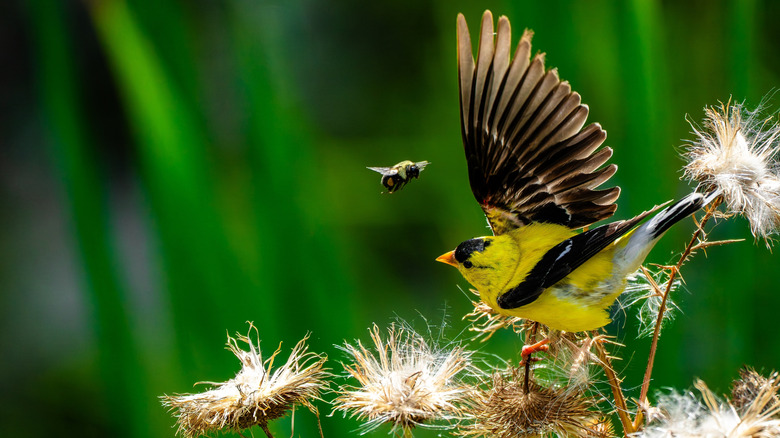
American goldfinches
 John Pepp/Shutterstock
 American goldfinches are another bird that loves to feast on dandelion seeds. These bright yellow and black beauties can be found all over the country, and they’ll gladly pluck the fluffy parachutes off dandelions to get at the seeds inside. Seeds make up a big part of a goldfinch’s diet, so dandelions are a go-to snack for them.
Black swallowtail butterflies
 6381380/Getty Images
 It’s not just birds that go for dandelions – butterflies like the black swallowtail also love ’em. These beauties will sip the sweet nectar from the bright yellow dandelion flowers, especially in the spring when other blooms are scarce. You can spot black swallowtails by their dark wings with blue and yellow markings.
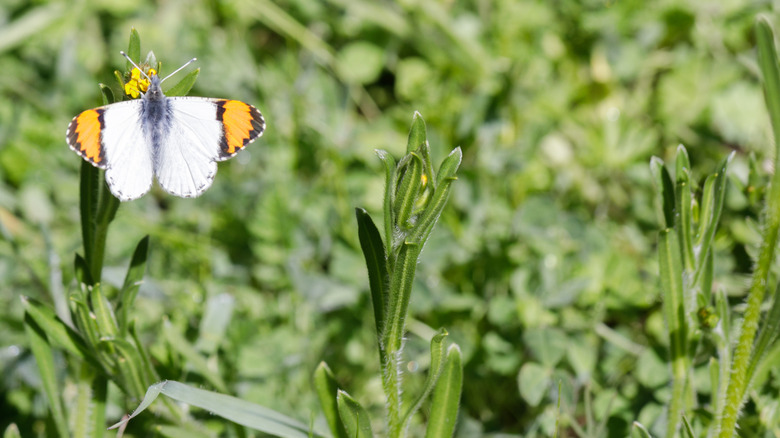
Sara orangetip butterflies
 yhelfman/Shutterstock
 Sara orangetip butterflies are another butterfly that loves to sip nectar from dandelions. These beauties live on the West Coast and have distinctive orange spots on the tips of their wings. As adults, they’ll flit from dandelion to dandelion, enjoying the sweet nectar.
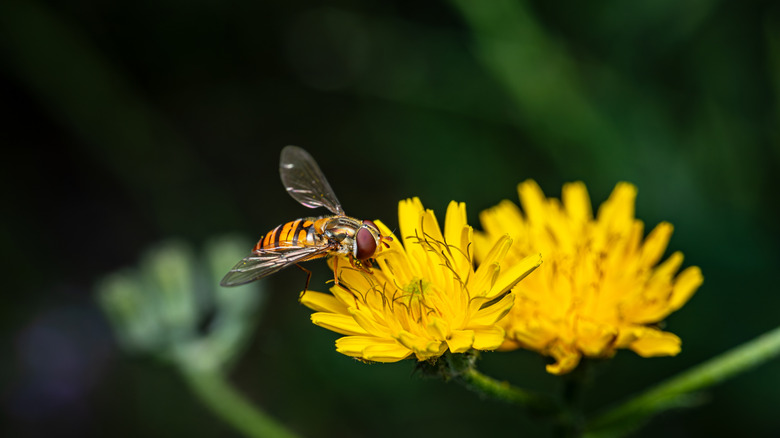
Hover flies
 ervin herman/Shutterstock
 Hover flies, also called flower flies, are another insect that loves to feast on dandelion nectar. These guys are pollinators, and they also help get rid of pesky aphids. Hover flies can be hard to tell apart from bees, but their big eyes and lack of a stinger are good clues.
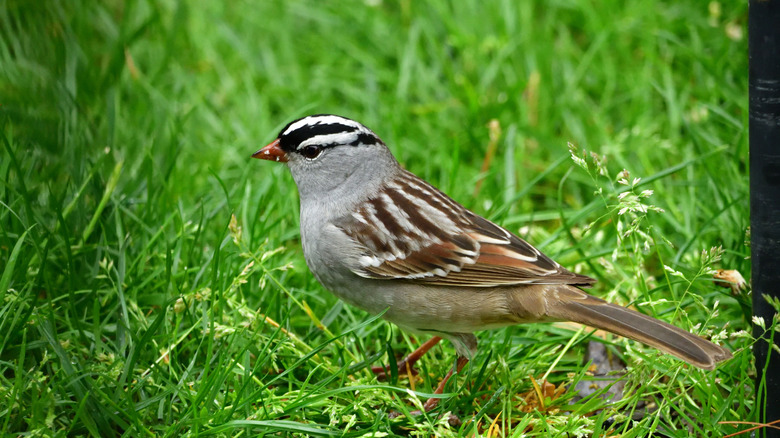
White-crowned sparrows
 Richard Carson/Getty Images
 White-crowned sparrows, with their distinctive black and white heads, are another bird that loves to eat dandelion seeds. You may spot them plucking the fluffy parachutes to get to the tasty seeds inside. These sparrows are found all across the country, except for a few spots on the East Coast.
Indigo buntings
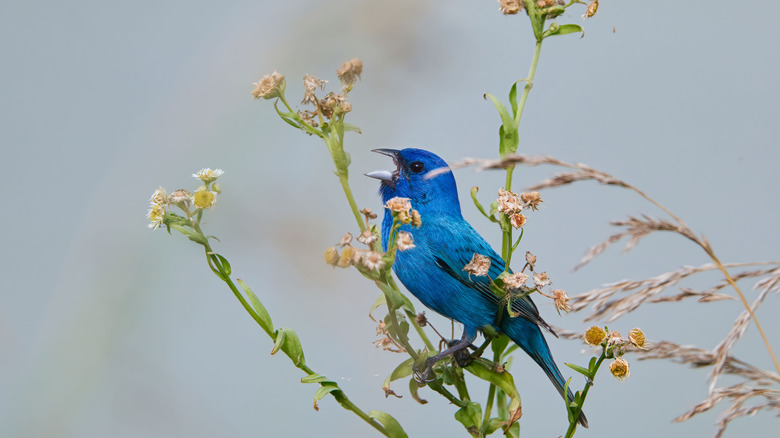 Wirestock/Getty Images
 The stunning blue feathers of indigo buntings are a common sight in weed fields during the summer. While they mostly eat bugs and spiders, these birds also enjoy snacking on dandelion seeds. Indigo buntings can be found across the eastern and southwestern states during the warmer months.
Painted lady butterflies
 Henri_Lehtola/Shutterstock
 Painted lady butterflies, with their iconic calico-patterned wings, are another butterfly that adores the nectar from dandelions. As they flit from bloom to bloom, they help pollinate plants around your yard. Painted ladies are one of the most widespread butterfly species, so you can find them in every state.
Milbert’s tortoiseshell butterflies
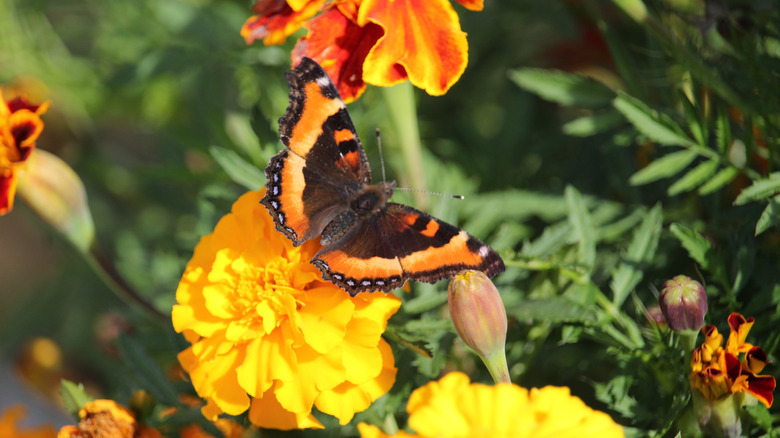 Deb Anderson/Shutterstock
 Milbert’s tortoiseshell butterflies look a lot like painted ladies, with their orange and dark brown wings. But these beauties often lack the white markings and have little blue dots on their hindwings instead. Like painted ladies, Milbert’s tortoiseshells also love to visit dandelions for their sweet nectar.
Bumblebees
 Denda29/Shutterstock
 Bumblebees are a common sight in springtime gardens, and they’ll gladly visit dandelions for their nectar and pollen. Dandelions are especially important for bumblebees since they bloom so early, sometimes being the only flowers available in early spring. Lots of different bumblebee species love dandelions.