
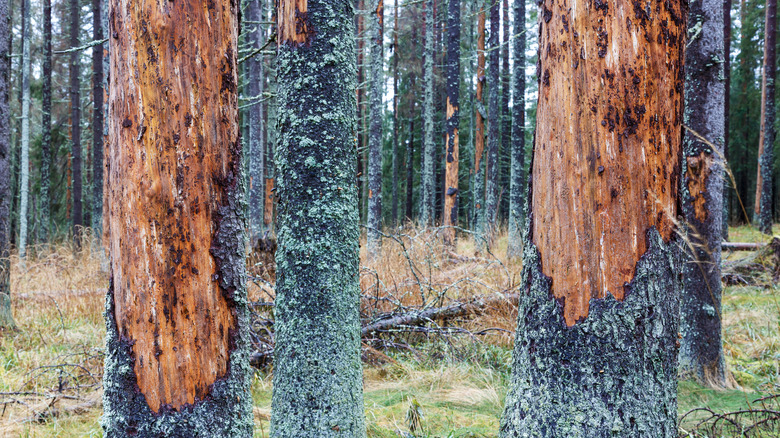
These little bugs, about the size of a grain of rice, create tiny holes in the bark and branches of trees. Their super small larvae munch on the inner bark of already weak trees, circling the tree until it dies. Both native and foreign beetles attack different kinds of trees, from cedar to oak and pine. Unfortunately, treating infected trees with pesticides is really tough, since the beetles live and work under the bark where the sprays can’t reach them. The best way to control these destructive critters is by keeping your trees healthy. When you peel back the bark of a tree with bark beetles, you’ll see a maze of tunnels the larvae have dug. You might also spot little piles of sawdust from their chewing. Only a few bark beetle species actually cause a tree’s death; the rest just speed up the demise of weak trees that may have otherwise died on their own. In the past, all bark beetles in the US attacked sickly trees, but some new invading species can go after healthy ones too. The bugs can also kill trees by spreading nasty diseases like Dutch elm disease. These beetles are usually red, black, or brown and shaped like little cylinders, with short antennae and strong jaws. As they chew their way out from under the bark when they’re all grown up, they create the holes you see in infested trees. They’re usually less than 1/3 of an inch long.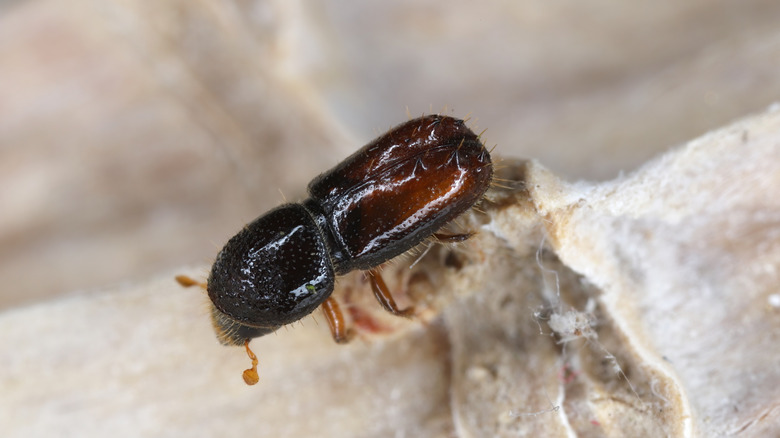 Tomasz Klejdysz/Shutterstock
Bark beetle mitigation and prevention
 Boris Ipatov/Getty Images
 Pesticides with specific ingredients like bifenthrin, carbaryl, or permethrin that are made for fighting bark beetles can work, but you have to use them at the right time – usually in spring or early summer, before the beetles come out. For mountain pine beetles (a common West Coast kind), spray in May. The bark needs to be soaked so the pesticide gets into all the cracks and crevices – when the beetles try to chew through, the poison will get ’em. If you’re not sure what kind of bark beetles are in your area, talk to your local expert.
Once the tree is infested, pesticides won’t help. If you find a tree with bark beetle damage, and it’s just the branches, prune off the infested branches and get rid of them the right way. If the trunk is damaged, you’ll need to cut down the whole tree to stop the beetles from spreading to other trees and to prevent falling branches and trunks. The wood won’t feed the beetles once it’s dried out, so cut it into smaller pieces to dry it faster, and use it for firewood, haul it away, or bury it. Keep watching the area until you’re sure the beetles are gone.
The best way to avoid bark beetles is by keeping your trees healthy. Water them deeply when they need it, prune them right, and remove any vines or other plants competing with them. Spread mulch out to the edge of the tree’s branches, and be careful not to hurt the trunk with your lawnmower or trimmer. Removing dead or dying trees also helps keep the beetle population down.