
A Montana nurse has walked about 10 miles down the state’s highest mountain with a steel-tipped trekking pole still lodged through his body, and he says he would make the same call again. David Cifaldi, 32, fell near the top of Granite Peak and was impaled on his own pole. He then decided the best rescue plan was to rescue himself.
A fall near the summit
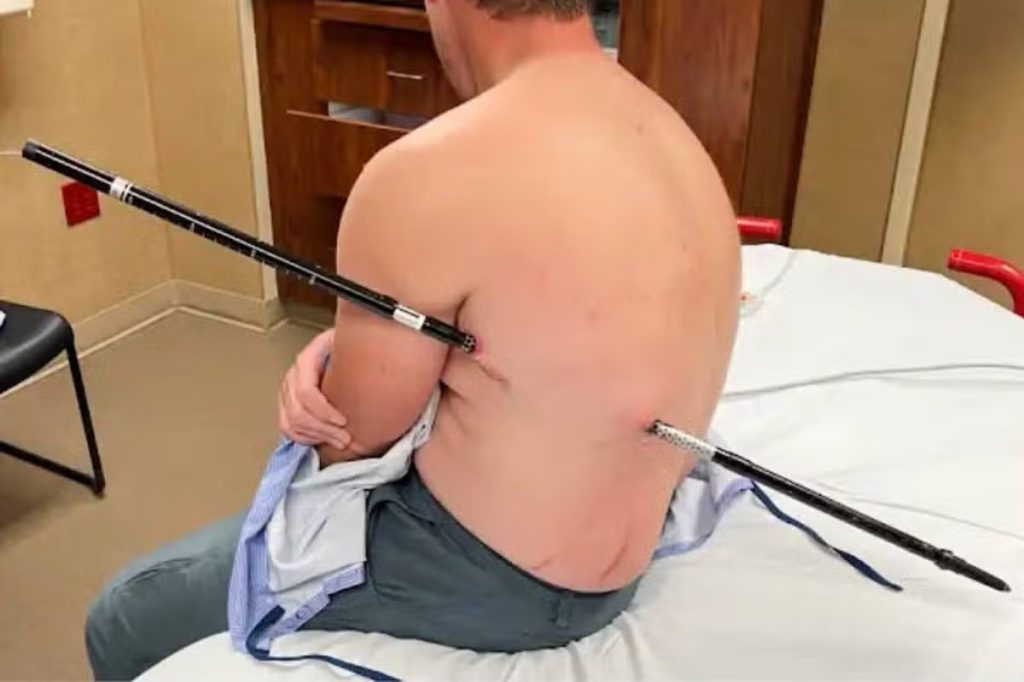
Cifaldi and two friends were crossing the Froze-to-Death Plateau, close to the summit, when he lost his footing. The 44-inch pole pierced the tissue beneath his left arm and came out through his back, missing every critical organ.
The group contacted emergency services at 9:44 a.m. on July 20, moments after the accident. A helicopter evacuation would have been very expensive, and Cifaldi, who specializes in wound care at a hospital in Billings, began examining himself.
A nurse’s own diagnosis
He was conscious, felt little pain, and was barely bleeding. The pole was not moving. His friends were unsure about walking out, but Cifaldi was confident. "I’m pretty confident this is outside my chest wall. ‘Tis but a flesh wound," he recalled saying.
Using a Garmin inReach satellite messenger, the trio told local emergency services about their plan to descend on their own. Then they set off.
Six hours to the trailhead
The three men picked their way down an unmarked path, over boulder fields and snow, and through dense vegetation. The trek took more than six hours, covering roughly 10 miles and dropping around 5,000 feet to a trailhead where Cifaldi’s friend Jesse Ross had left a vehicle.
Ross said Cifaldi’s confidence made it all possible. "Who are we to say anything? He’s the medical person. Our job is just to support at that point," he said.
Stillwater County Search and Rescue commander Ty Williams followed the group’s progress through a dispatcher. By 1:30 p.m. the trio asked that the nearest hospital be warned they were coming. Williams said there was no danger to anyone else, and the team would not force its help on a man who did not want it.
Hospital and home
Around 3:30 p.m. the group was driving to the nearest medical facility. Staff there decided Cifaldi needed more specialized care, so they continued to St. Vincent Regional Hospital in Billings, where he works. Doctors removed the pole and dressed his wounds, and he was back at his job within days.
Granite Peak, at 12,800 feet, is known for unpredictable weather, including dangerous lightning storms and freezing temperatures. In 2019, a 65-year-old Minnesota man died after falling about 150 feet near the top.
Speaking in Ross’ front yard in Billings, Cifaldi stood by his decision. "I think 99 times out of a hundred I would make the same decision," he said. He pointed out that search and rescue is free but a flight is not, and that cost played a part. Having two experienced friends with him, and a way to call for help if things went wrong, made the choice much easier.
Source: The Mirror US

Leave a Reply