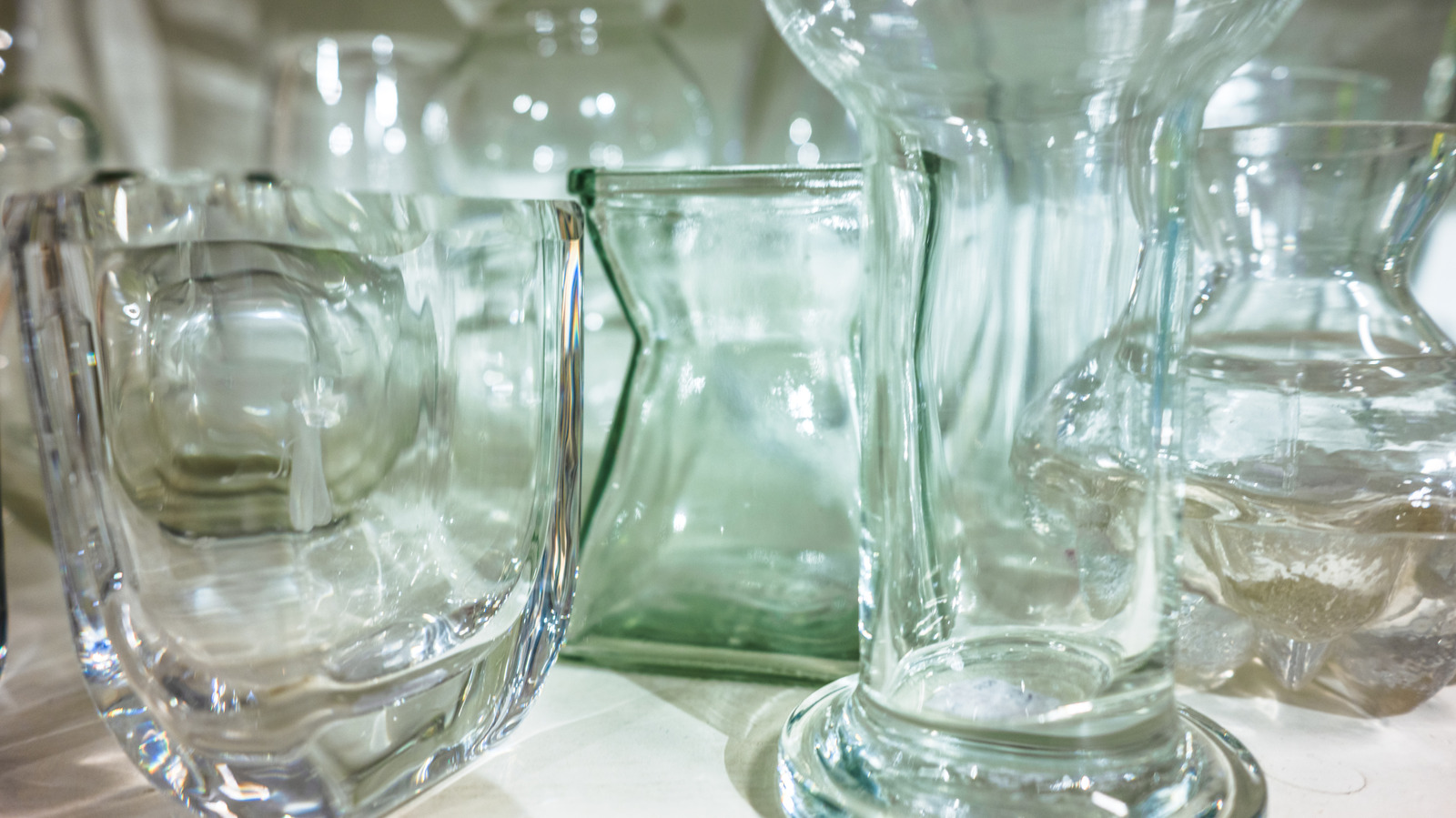
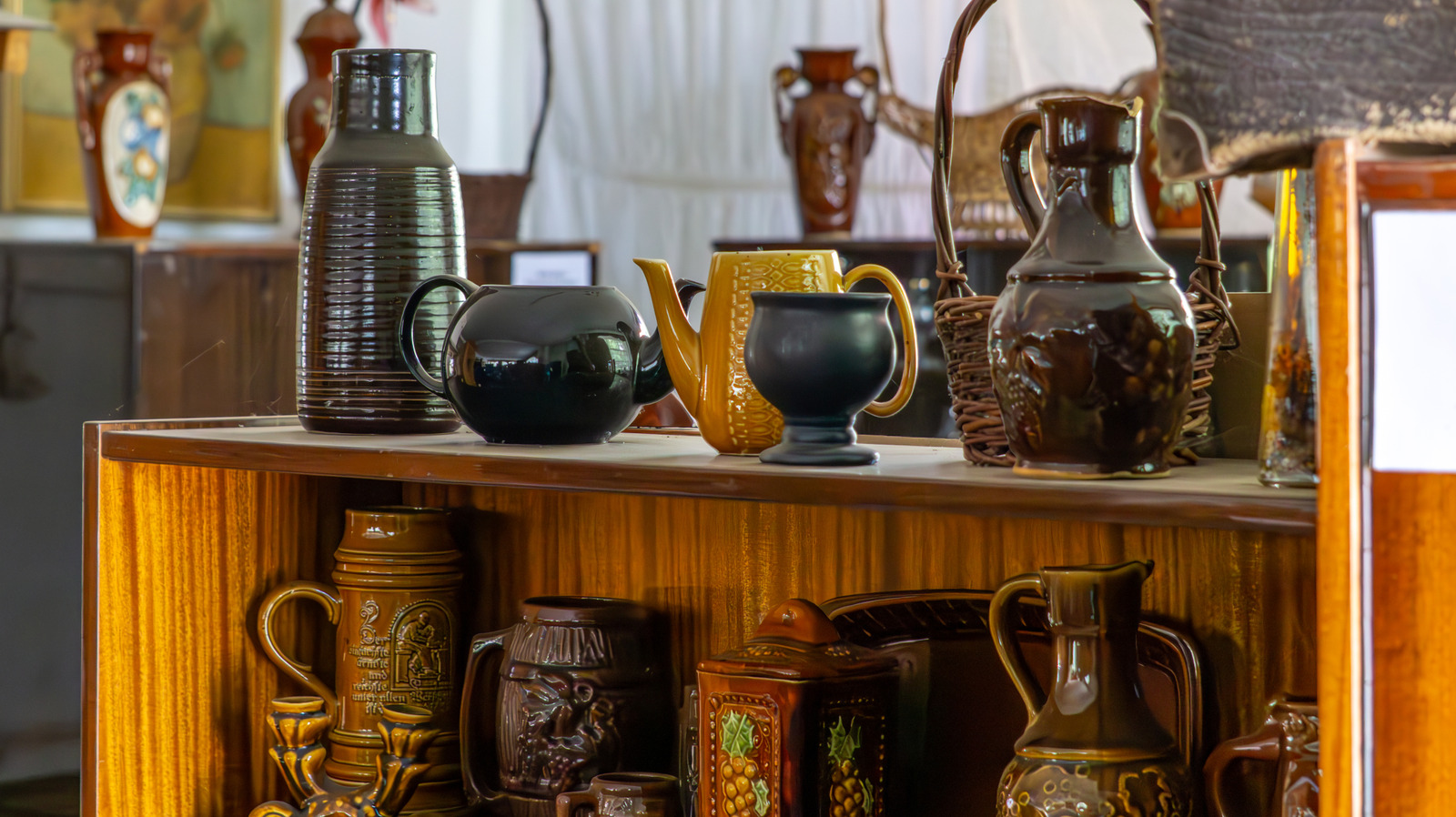
Browsing the housewares or ceramic aisles of the thrift store can feel like an overwhelming sea of chipped plates, promotional coffee cups, and clear glass. But don’t be discouraged! If you know what to look for, you can find some real treasures, including antique pottery. Whether you’re hoping to find a valuable piece to flip online or just want to add to your collection of mid-century gems, this guide will help you spot the good stuff.
We’ve consulted an expert to determine the most valuable vintage pottery brands to be on the lookout for when thrifting. From the iconic McCoy cookie jars to the rare and iridescent Zsolnay, these are the 11 vintage pottery brands you’ll want to have on your radar. So grab a shopping cart and get ready to dive into those dusty bottom shelves – you never know what hidden gems you might uncover!
McCoy is the king of American kitsch and cookie jars

McCoy Pottery got its start in 1910 in Roseville, Ohio, producing common everyday items like jugs and jars. By the 1930s and 40s, they had expanded into decorative pottery, which is what they’re best known for today. Their iconic whimsical cookie jars shaped like fruit, clowns, and animals are particularly sought-after by collectors.
The most valuable McCoy pieces are from the 1930s to 1960s, as there were fewer forgeries back then. Look for pieces with an overlapping “NM” or “McCoy” mark on the bottom, and keep an eye out for little imperfections like uneven glazing – that’s part of the charm!
Van Briggle brings art nouveau from the Rockies
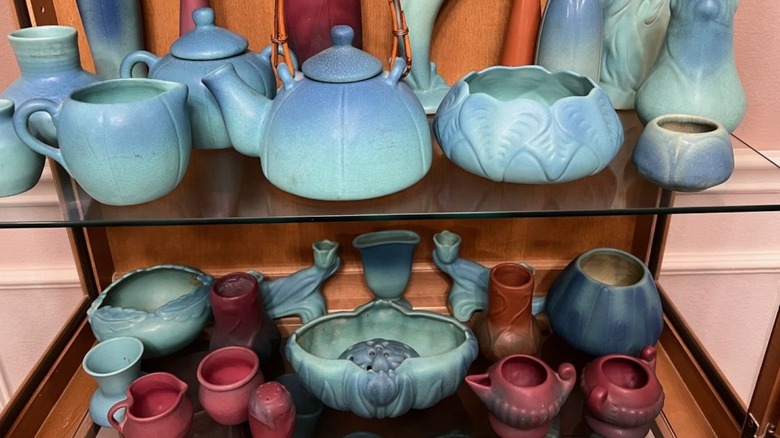
Van Briggle is one of the oldest American art potteries, founded in 1899 in Colorado Springs. Their early art nouveau pieces with distinct matte turquoise or maroon glazes are the most valuable, but even their later mid-century work can be quite pricey. Look for the Double A logo on the bottom to identify Van Briggle pottery.
While rare, finding a Van Briggle piece at a thrift store is an exciting find for collectors. Even the less rare post-art nouveau pieces from the 1950s and 60s are still worth a good amount of money.
Pacific Pottery captures the vibrant colors of the Golden Age

Pacific Pottery was founded in the 1920s in Los Angeles and became known for their bright, colorful pottery designed to lift people’s spirits during hard economic times. Their Hostess ware line with fun Art Deco shapes and mix-and-match dishes is particularly iconic.
Pacific Pottery pieces often have a “Pacific” in-mold stamp on the bottom, and are known for their experimental, blotchy glazes in bold, Fiesta-esque colors. These vibrant, midcentury-style dishes are an affordable and under-the-radar find, especially if you’re shopping on the West Coast.
Catalina Clay is the romantic souvenir of the stars

Catalina Clay Company started as a pipe and tile company in Southern California during the Golden Age of Hollywood. Their pieces made from Catalina Island’s red clay were often sold as souvenirs, and feature iconic images like the Catalina Casino.
Look for that bright red clay color and “Catalina Pottery” markings on the bottom. The very first pieces even have numbers indicating when they were made. Owning a Catalina Clay piece is like owning a piece of California history!
Hull is a prime definition of grandma chic and pastel florals
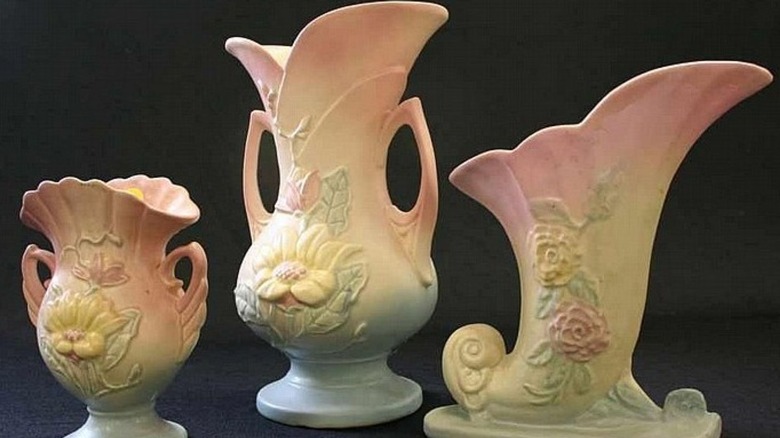
Hull Pottery is known for its “grandma chic” vibe, with matte pastel floral designs that evoke nostalgic, cozy feelings. Look for pieces with an ombré effect and raised flowers.
While Hull was mass-produced, that doesn’t mean you can’t still find great deals on it at the thrift store. Just keep an eye out for the “Hull U.S.A.” or “Hull Art U.S.A.” markings on the bottom, and aim for pieces in great condition without any cracks or chips.
Red Wing spans rustic stoneware to Mid-Century Modern

Red Wing Pottery started in 1861 making essential stoneware items like crocks and jugs, but expanded over the years to include colorful, floral-themed art pottery as well. Their Prismatique and Smart Set lines with unique glazes are particularly collectible.
Identify Red Wing pieces by the embossed “Red Wing Stoneware” stamp on the bottom. Older pieces will have this, while newer ones have a circular ink stamp that’s not as valuable.
Zsolnay is the iridescent Hungarian Holy Grail
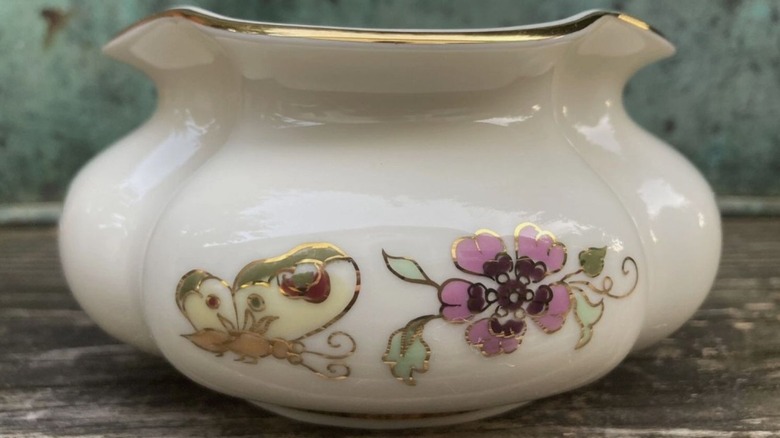
Zsolnay is a rare Hungarian pottery brand known for its beautiful iridescent eosin glaze that creates a metallic, oil-on-water effect. Finding a Zsolnay piece at a thrift store is considered the holy grail for many collectors.
Look for pottery with a lustrous, shifting color finish, and check the bottom for the distinctive five-church mark. Even a damaged Zsolnay piece has value, so don’t hesitate to snatch one up if you spot it!
Roseville remains the Heavyweight Champion of floral art pottery
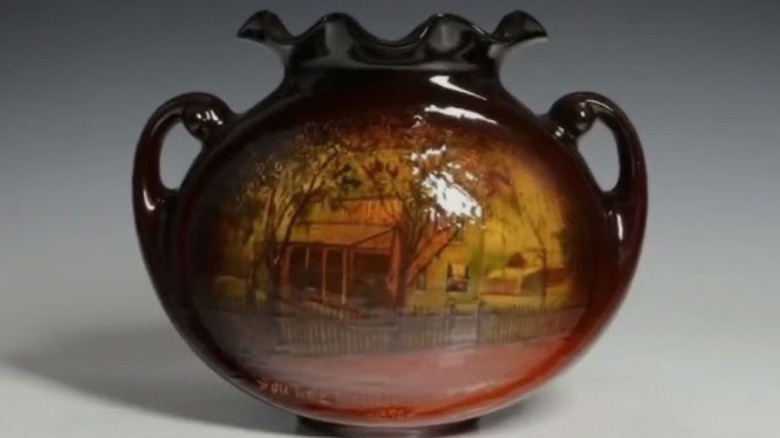
Roseville Pottery was a powerhouse in the early 20th century, known for their mass-produced but high-quality art pottery with naturalistic floral motifs. Their White Pinecone line is particularly valuable.
Authentic Roseville pieces will be hefty and well-made, with a raised or incised “Roseville” or “Roseville U.S.A.” mark on the bottom. But beware of reproductions – it’s important to inspect the stamps carefully when hunting for this brand.
Weller offers an affordable option for new collectors

Weller Pottery is a great option for new collectors, with pieces that are more affordable than some of the top brands but still highly collectible. From their floral-form vases to their woodland-themed Woodcraft line, Weller has a wide variety of styles to look for.
Markings can range from a simple “WELLER” stamp to a script signature, so be sure to flip pieces over to check the bottom. While their most valuable art nouveau designs can get pricey, you can still find great smaller Weller pieces for under $50 at the thrift store.
Honorable mention: Clarice Cliff created bold art deco geometrics for the Jazz Age

Clarice Cliff was a trailblazing female ceramicist who opened her own pottery studio in the 1930s, creating bold, geometric Art Deco designs. Her pieces, marked “Bizarre by Clarice Cliff”, are considered a holy grail for many collectors.
Clarice Cliff pieces are easy to spot once you know what to look for – they feature bright, paint-brushed patterns of triangles, sunbursts, and floral cottages. If you come across a plate that looks like a Picasso painting, flip it over for the signature mark.
Honorable mention: Wedgwood delivers the timeless appeal of matte Jasperware
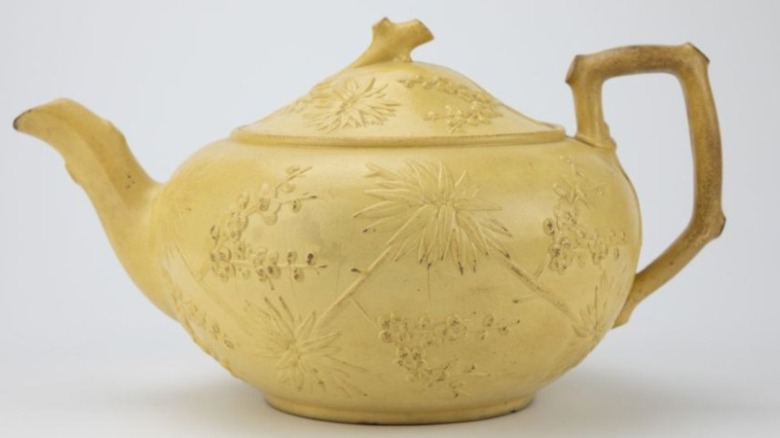
The iconic British ceramics brand Wedgwood is best known for their elegant, matte Jasperware in shades of blue, white, and other soft colors. These classically-inspired pieces with their unglazed finish are highly collectible, especially in the rarer lilac, yellow, and sage green colorways.
Look for the “WEDGWOOD” stamp on the bottom to identify the oldest and most valuable Jasperware pieces. Newer pieces from 1891 onward will say “WEDGWOOD MADE IN ENGLAND”, but they can still be worth picking up for collectors.