
Putting up a birdhouse in your backyard can be super entertaining for you and offer a nice cozy spot for all sorts of feathered friends. But not every bird species is a fan of nesting boxes. Some prefer more open-air living arrangements instead. However, there are plenty of birds who really appreciate the shelter a birdhouse provides when they’re building a nest and raising their little ones. These cavity-nesting birds love the protection an enclosed space gives them. Even if you set up a birdhouse, it might not attract a nesting bird right away. Don’t get discouraged if it takes a while – try moving the house to a different spot on your property. You can also help your chances by putting up multiple birdhouses, so the birds have options to choose from. And be sure to pick a design that’s suited for the specific type of bird you’re hoping to attract. With that in mind, here are the most common backyard birds that adore birdhouses and what makes the best kind of house for each one.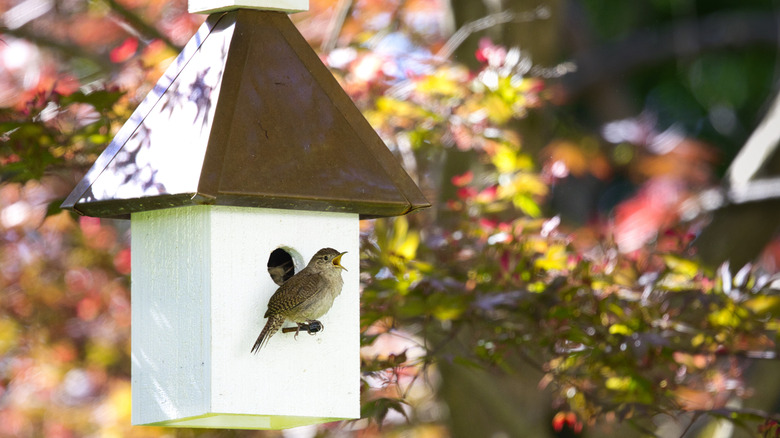 Sd Ghorpade/Getty Images
Bluebirds love small houses facing east
 Gordon Magee/Shutterstock
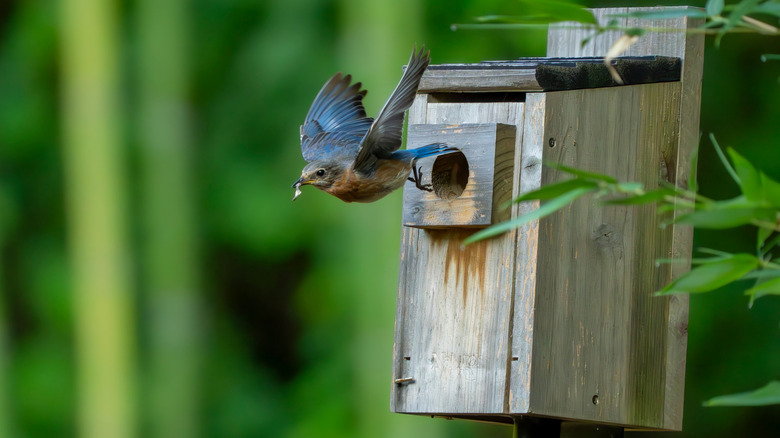
There are three types of bluebirds – eastern, western, and mountain – and all of them will gladly take shelter in a nesting box to keep their little chicks safe. Plus, bluebirds will help out by eating up pests.
For bluebirds, the ideal birdhouse is medium-sized, around 4 by 4 by 12 inches, with room to expand up to 5 by 5 by 12 inches. The entrance hole only needs to be 1 ½ inches wide – that’s big enough for bluebirds but small enough to keep out larger birds that might take over. Mount the house on a pole 4 to 6 feet off the ground, with the entrance facing east toward an open area like a field or wetland where bluebirds can find plenty of bugs to feed their babies.
Bluebirds start nesting anywhere from February to September, with the peak from March to August. To make your birdhouse as appealing as possible, point the entrance east – that’s where bluebirds will find the most insect-filled spots.
Wrens love compact birdhouses near people
 Tony Quinn/Shutterstock
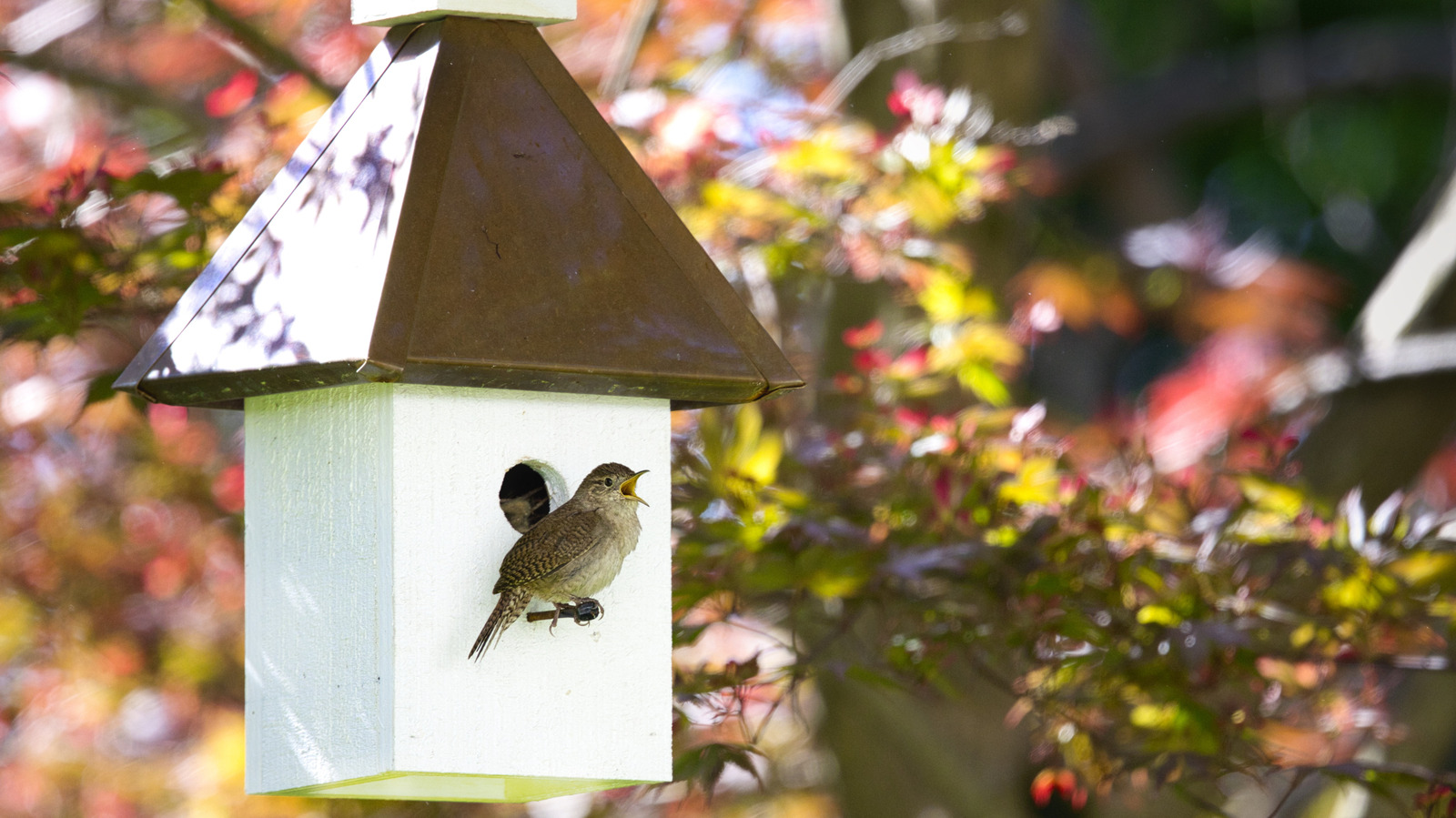
If you want some feisty little songbirds around, wrens are a great choice. These petite birds prefer nesting spots close to human activity. In return for a cozy birdhouse, they’ll reward you with lots of singing, especially during breeding season when the males can chirp up to 10 times per minute. The right wren house is compact, around 4 by 4 by 8 inches, with a tiny 1 ⅛-inch entrance hole that keeps out larger birds.
Wrens like hanging birdhouses or ones mounted on a pole 5 to 10 feet up to protect against ground predators. Some species, like Carolina wrens, will even use a hidden house nestled in tree branches and foliage.
Tree swallows and violet-green swallows also like small houses
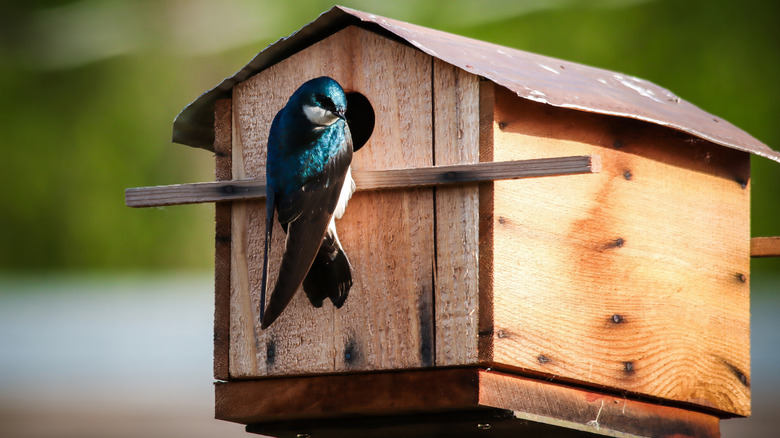
Smaller swallows like tree swallows and violet-green swallows are happy to move into birdhouses too. The perfect size is about 4 by 5 ½ by 9 inches – about the same as a bluebird box with that 1 ½-inch entrance hole. Mount the house at least 5 feet up, and don’t bother with a perch outside, as swallows won’t use it and it may just attract unwanted birds like starlings.
Having swallows around is great because they eat lots of insects like flies and wasps, helping to keep those pests in check. They also enjoy a diet of insects plus berries.
House sparrows like nesting in groups so install several small houses
 Bob Ski/Shutterstock
House sparrows sometimes get a bad rap for taking over other birds’ nesting boxes, but their own population is actually declining. If you want to give these petite birds a spot to nest, a small birdhouse is usually all they need. The dimensions should be at least 4 by 4 by 8 inches with a 1 ½-inch entrance hole. Aim to face the entrance northeast and mount the house 6 to 7 feet high.
House sparrows like nesting in groups, so putting up several birdhouses close together will make your yard more appealing to them.
Purple martins need a medium-sized house near people
 Nancy Strohm/Getty Images
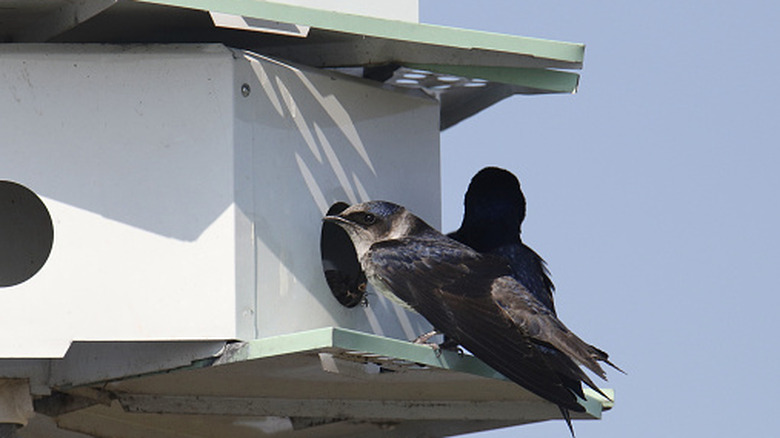
Purple martins are a type of swallow that almost always rely on human-provided nesting boxes in the eastern U.S. These colony nesters do well in a multi-unit birdhouse or with several single-unit houses clustered together.
Purple martins need a bigger home – at least 6 by 6 by 10 inches, or 7 by 12 inches if you can swing it. The entrance hole should be 2 ¼ inches wide, or 3 inches wide by 1 3/6 inches high if you use a crescent-shaped opening to keep out starlings. Mount the house 12 to 20 feet off the ground, within 100 feet of your home, barn, or workshop where the martins can be near human activity.
Eastern screech owls will use a big enough birdhouse
 Randy Bjorklund/Shutterstock
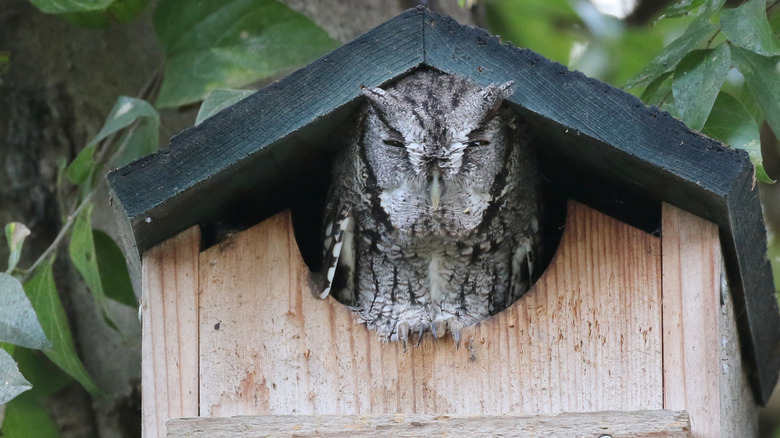
You may not often spot Eastern screech owls in your yard, as they’re well camouflaged and more active at night. But if you put up a big enough birdhouse, these owls may move in. The box should be around 9 ⅝ by 11 ¼ by 17 ⅜ inches with a 3-inch entrance. You can even mount two boxes close together in case the owls abandon their first nest.
For Eastern screech owls, position the birdhouse 10 to 30 feet up a tree, facing east or south. Make sure there’s a nearby branch for fledglings to use as they get ready to leave the nest.
Woodpeckers will love a birdhouse filled with sawdust
 Jaclyn Vernace/Shutterstock
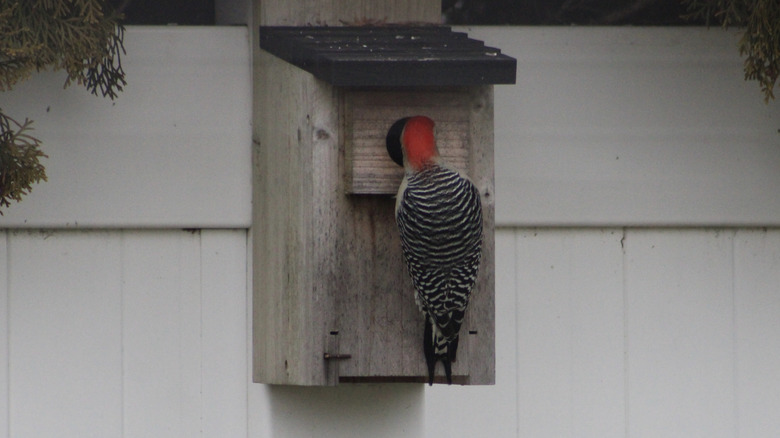
Woodpeckers are cavity-nesting birds, meaning they can dig out their own homes in trees. But if their natural habitat is shrinking, they may turn to a manmade birdhouse instead. The size you need depends on the woodpecker species in your area – downy woodpeckers need a 4 by 4 by 8-inch box, while the larger redheaded woodpecker needs 6 by 6 by 14 inches. Mount the house 10 to 20 feet up.
To make a woodpecker birdhouse even more tempting, fill it with sawdust or wood chips. This mimics the feeling of a decaying tree that woodpeckers would naturally excavate for nesting.
Titmice like birdhouses near trees or bushes
Related Posts
Grow Citrus Trees Happily in Pots – 11 Compact Varieties
DimaBerlin/Shutterstock Having your own little citrus garden is so rewarding! Just imagine the amazing scent…
Easy Rice Water Trick to Supercharge Fertilizing Power
Sawitreelyaon/Getty Images Rice water has been around for ages as a sustainable water source that…
Grow These Herbs Along With Lavender To Attract More Pollinators To Your Garden
wild_venus/Shutterstock Lavender is a real showstopper in the garden, with its aromatic green leaves and…