See tiny piles of sawdust? Notice perfectly round holes in your wood? Spotted some big, shiny bees hanging around your place? All of these are warning signs that carpenter bees might be tunneling into your exposed wood to make nests. Now, carpenter bees don’t actually munch on wood, but those holes they create definitely look pretty rough. Plus, carpenter bees can be a real problem since their holes can eventually lead to structural damage. If you want to ditch them without chemicals, don’t waste your time spraying everything with essential oils. There’s actually a cool Amazon product worth checking out instead: fake wasp nest decoys. These decoys are pretty straightforward—they’re designed to look like real hornet nests. They’re made from durable, weather-resistant fabric and measure about 7.9 inches wide and 11.4 inches tall. You can even fold them up when you don’t need them. The whole trick is hanging them outside to convince carpenter bees, wasps, and other stinging insects that the territory is already taken. Since bees and wasps are territorial creatures, spotting what looks like an existing wasp nest might just convince them to set up shop somewhere else instead. That said, be realistic about what these can do. There’s not a ton of scientific proof that fake wasp nests work like a charm at stopping real ones. But that doesn’t mean they’re completely pointless either. Lots of Amazon customers report seeing fewer wasps and bees hanging around after putting these up near their homes, though some folks didn’t see much difference. Your best bet is to use these fake nests alongside other methods to tackle your bee and wasp problem on your deck, porch, and around your home.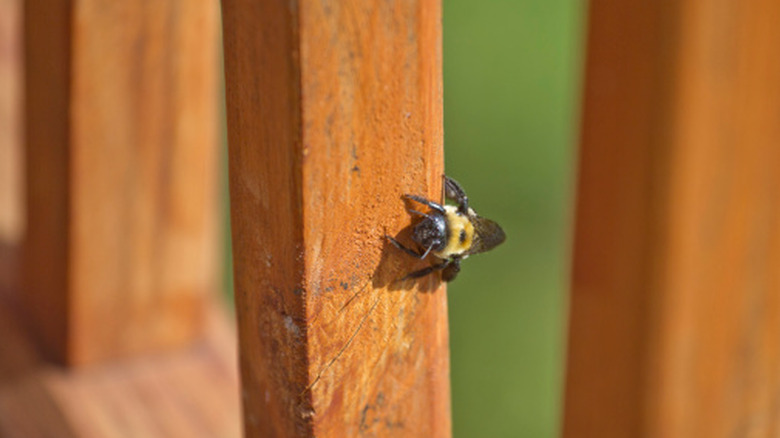 Awakenedeye/Getty Images
Stop Using Oils: Buy This Amazon Product to Keep Wood Bees Out
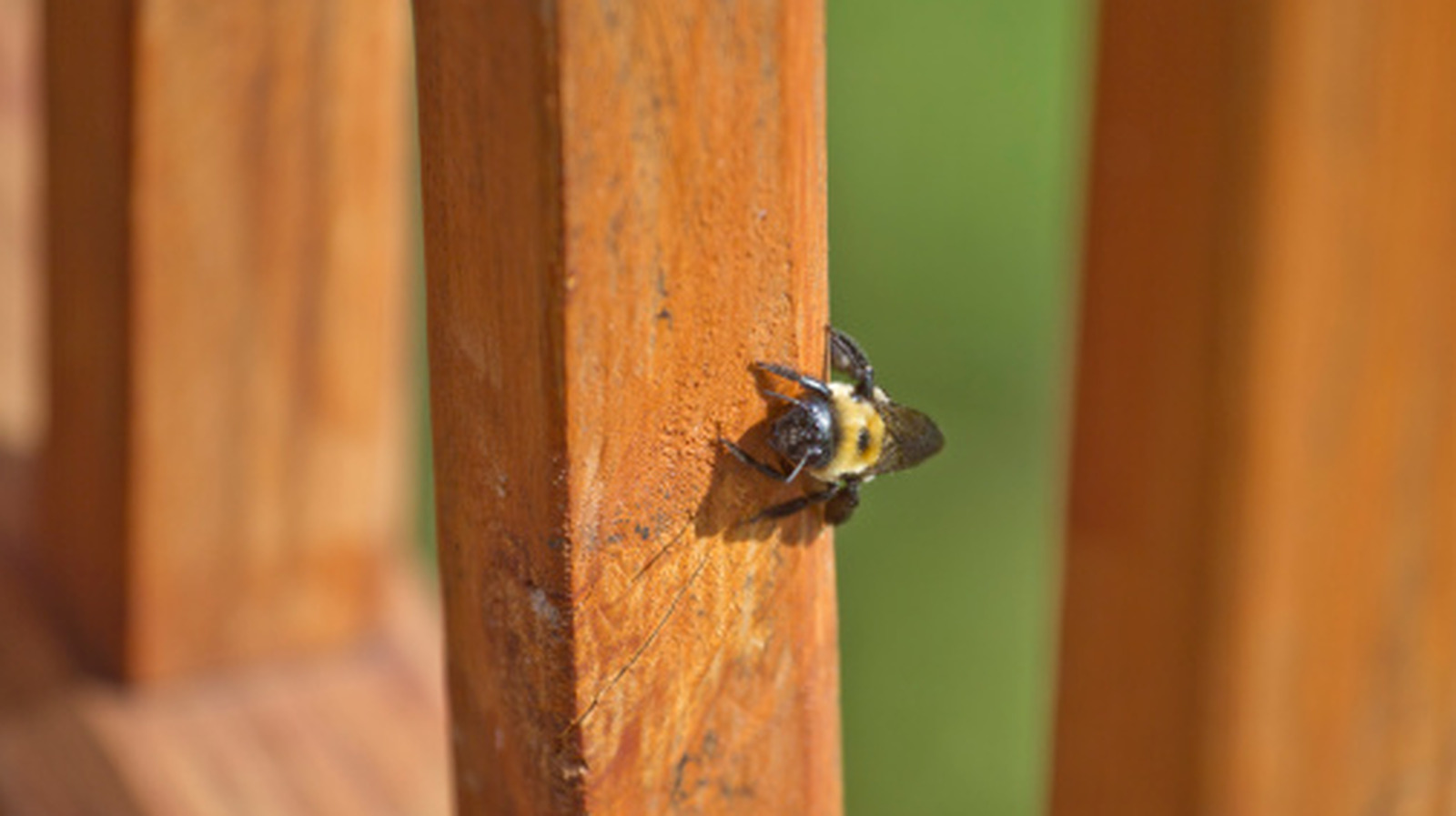
How to use fake wasp nests to keep carpenter bees out

First things first—placement matters big time. Hang your decoys in spots where carpenter bees are likely to show up, like wooden porches, decks, pergolas, or anywhere you’ve got exposed, unpainted wood. Make sure you put them somewhere that wandering carpenter bees will actually notice them. Just keep them away from places where people or pets might accidentally bump into them. And here’s a pro tip: don’t clump all your fake nests in one spot. Spread them out across your yard.
Timing is key too. In most places, carpenter bees wake up and head out in spring, and the females start hunting for good nesting spots around April or May. So you’ll want to get these decoys up before that happens. To figure out if they’re actually working, don’t just count how many carpenter bees you see near the decoys. Instead, keep an eye on where they’ve already built nests and gently brush away the old sawdust piles.
Check the area every week or two. If you spot fresh sawdust, new holes, or more damage popping up, that means the carpenter bees have decided to move in anyway, and you’ll need to bring in reinforcements. But don’t stress! There are plenty of other options to try. You could swap out damaged wood for painted wood—carpenter bees tend to skip right over painted surfaces. Or when fall rolls around, you can seal up any holes you find with wooden putty or dowels to block future bees from setting up shop.